How to Maximize Your Vermont Airbnb Income in 2026
Professional photography, dynamic pricing, and the right amenities are what actually move the needle on Vermont Airbnb income. Real numbers from the Stratton market.
How to Maximize Your Vermont Airbnb Income in 2026
You own a Vermont property near Stratton Mountain. You're renting it out on Airbnb — or thinking about it. And you're wondering whether you're leaving money on the table.
You probably are. Most Vermont STR owners earn 30–50% less than they could from the same property. Not because of bad luck. Because of a handful of fixable mistakes.
Here's what actually moves the needle.
What Vermont Vacation Rentals Actually Earn
Let's start with real numbers, not aspirational projections.
Well-managed properties near Stratton Mountain earn $60,000–$120,000 per year in gross revenue. That range is wide because bedroom count, amenities, and management quality vary enormously. A 3-bedroom with a hot tub earns very differently than a 5-bedroom with a pool, hot tub, and sauna.
Average daily rates in the Stratton market: $350–500/night in peak season (Presidents' Week, Christmas/New Year, winter weekends), $200–300/night in shoulder season. Peak foliage October weekends lean toward the higher end of that shoulder range.
Here's the number that matters most: professionally managed properties near Stratton run 60–75% occupancy annually. Self-managed properties average 40–55%. That gap — 15 to 20 occupancy points — is where most of the money gets lost.
On a $350/night average property, 15 extra occupancy points over 365 days equals roughly $19,000 in additional annual revenue. That's not a rounding error.
The Single Biggest Driver: Professional Photography
If there's one upgrade that pays for itself faster than anything else, it's professional photography.
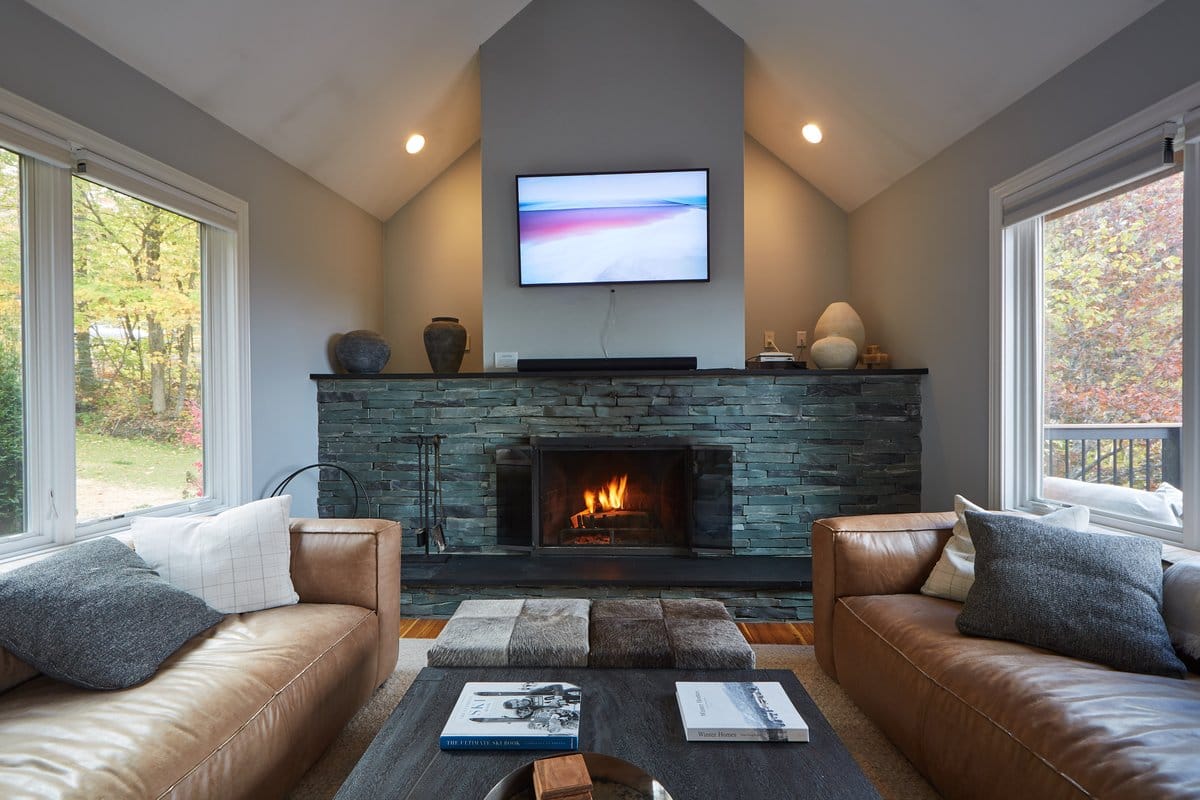
Properties with professional photos earn 20–40% more per booking and book 30–50% faster than comparable listings with amateur photos. That's not marketing spin — it's data Airbnb has published, and it matches what we see in the Stratton market.
Most owners use iPhone photos. The gap between a well-composed iPhone shot and professional real estate photography is obvious to guests — and it shows up in your click-through rate before they ever read your listing.
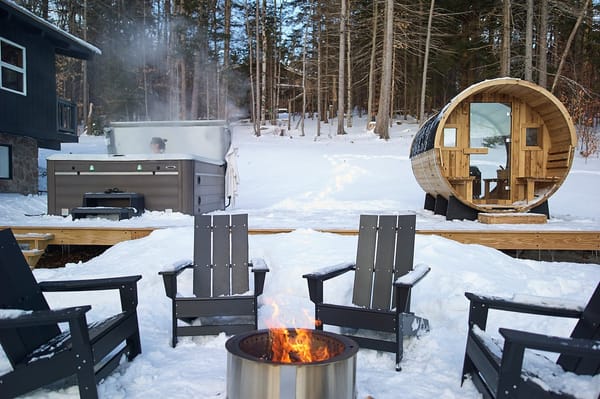
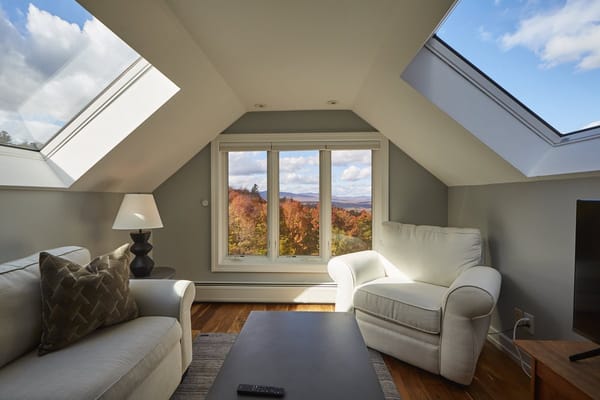
Hot tubs photograph particularly poorly with phones. Saunas look like closets. Views lose their scale. A professional photographer knows how to capture these features in ways that make guests actually feel what staying there would be like.
If you're currently paying platform fees and dynamic pricing software subscriptions but using iPhone photos, you have your priorities backwards. Fix photography first.
(At Far & Away, professional photography is included in every onboarding. It's not optional because the ROI is too obvious to skip.)
Dynamic Pricing: Stop Leaving Money on the Table
Flat-rate pricing is the single most common and most costly mistake Vermont STR owners make.
Presidents' Week near Stratton is the single highest-demand period in the Vermont ski calendar. If you're charging the same nightly rate that week as a random January Tuesday, you are leaving substantial money on the table. Presidents' Week rates should be 3–4x your base rate. That's not gouging — that's supply and demand, and guests expect it.
The same principle applies in the other direction. A flat rate that makes sense for Presidents' Week will kill your occupancy in November. Dynamic pricing means charging more when demand is high, less when it's low — and filling your calendar more completely as a result.
Dynamic pricing tools like PriceLabs, Wheelhouse, and Beyond Pricing analyze real-time demand signals — how many listings are available in your market, how fast comparable properties are booking, local events, weather forecasts — and adjust your rates automatically.
Professional managers use these tools as a baseline and layer in local knowledge on top. If your property manager isn't running dynamic pricing, ask them directly why not. "We set rates manually based on experience" is not an acceptable answer in 2026.
Key Vermont pricing milestones to build your calendar around:
- Presidents' Week (February): highest rates of the year, 3–4x base
- Martin Luther King Weekend (January): second peak, 2–3x base
- Christmas/New Year's: 2–3x base, often books earliest
- Spring break (March): variable but strong
- Foliage peak (mid-October): 1.5–2x base
- July 4th: strong summer weekend, 1.5x+ base
Amenities That Move the Needle (and Ones That Don't)
Not all amenities are created equal. Some justify significantly higher nightly rates. Others are table stakes that guests expect without paying more. Knowing the difference will help you decide where to invest.
High-ROI amenities near Stratton:
- Hot tub: $5,000–15,000 installed, adds $20–40/night to average rate, pays for itself in 1–2 seasons. Near Stratton, it's essentially non-negotiable for premium rates.
- Sauna: Similar payback period, increasingly expected in premium Vermont rentals. A barrel sauna runs $3,000–8,000 installed.
- Pool: Significant premium, especially for summer bookings and large groups. Higher install and maintenance costs, but transforms summer occupancy.
- Fast, reliable wifi: Remote work travelers book Vermont rentals for weeks at a time. Slow wifi is a dealbreaker and shows up in reviews.
- Ski storage with boot dryer: Inexpensive to set up, meaningfully appreciated by skiers, consistently mentioned in positive reviews.
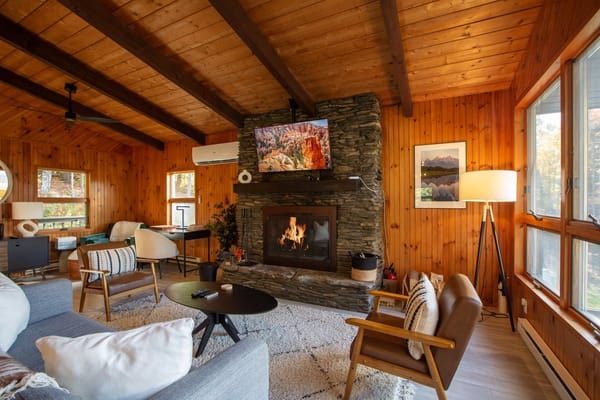
- Wood-burning or gas fireplace: Differentiates your listing visually and experientially, especially for foliage and early/late ski season.
Low-ROI amenities (table stakes or rarely a booking driver):
- Smart TV (guests expect it, won't book because of it)
- Kayaks and outdoor gear (nice to have, rarely the reason someone books)
- Outdoor speakers (same)
- Coffee station upgrades beyond a standard drip machine (guests appreciate it, won't pay more for it)
If you're trying to increase revenue without a major capital investment, wifi upgrade and ski boot dryers offer the best bang for the smallest spend. If you're willing to invest, a hot tub is the single highest-return addition you can make to a Vermont STR near a ski mountain.
Multi-Platform Listing: More Eyeballs, More Bookings
Most Vermont STR owners list only on Airbnb. That's leaving bookings on the table.
VRBO/HomeAway reaches a different demographic — often families and groups who skew slightly older, book longer stays, and tend to be less price-sensitive. They also tend to leave fewer but more detailed reviews. If your property is a 4-5 bedroom suited to larger groups, VRBO should be a meaningful part of your booking mix.
Google Vacation Rentals is free to list on through channel managers like Lodgify, Guesty, or Hostaway. It's growing fast as Google integrates rental search directly into travel results. Getting on it now costs you nothing and captures guests who search without going to Airbnb first.
Direct bookings are the gold standard. When a repeat guest books directly through your own site, you eliminate Airbnb's 15–18% platform fee entirely. On a $2,000 booking, that's $300–360 that stays with you (and your guest can get a lower price while you still net more). A basic direct booking capability via a channel manager pays for itself quickly on high-revenue properties.
Professional managers handle multi-platform distribution, channel syncing, and direct booking infrastructure as part of standard service. If you're self-managing, getting set up on two platforms with a channel manager is a one-time project worth doing.
Reviews and Reputation: The Algorithm Is Watching
Airbnb's search algorithm is, at its core, a reputation algorithm. Listings with more reviews, higher ratings, and faster response times rank higher — which means more visibility, more clicks, and more bookings at the rates you want.
The difference between a 4.7 and a 4.9 rating isn't marginal. It's a significant visibility gap on the platform. Guests also filter by rating, and most won't book below 4.8. If you're sitting at 4.7, you're invisible to a meaningful portion of potential guests.
Response time is a direct ranking factor. Airbnb tracks how quickly you respond to inquiries and penalizes slow responders in search rank. A guest who sends an inquiry at 11 PM on a Friday and hears back Monday morning has probably already booked somewhere else.
This is one of the clearest arguments for professional management. 24/7 guest communication isn't glamorous work, but it directly drives review quality and search rank — which drives occupancy and revenue.
To consistently earn 5-star reviews: make the property spotlessly clean (this is the #1 review driver), communicate clearly before arrival, fix maintenance issues fast, and set honest expectations in your listing description. Don't overpromise what the property delivers.
Seasonal Pricing Strategy for the Vermont Market
Vermont STR revenue is intensely seasonal. Understanding the calendar and pricing proactively is the difference between a mediocre year and a strong one.
Peak season (charge maximum rates, expect 90%+ occupancy on weekends):
Presidents' Week, Martin Luther King Weekend, Christmas/New Year's, spring break, foliage peak (mid-October weekends)
Strong season (solid demand, price 1.5–2x base):
Any winter weekend December through March, Thanksgiving weekend, July 4th, Columbus Day weekend
Shoulder season (maintain occupancy with modest discounting):
Weekdays in ski season, November (post-foliage, pre-ski), June, early April
Off-season (compete on price, focus on longer stays):
May, early December (pre-ski), late March (post-ski, pre-foliage)
Smart operators use the off-season strategically: offer weekly discounts to attract remote workers and extended-stay guests. A week-long booking at a 20% discount beats 5 empty days. Vermont's broadband infrastructure has improved enough that week-long remote work stays are now a real segment of the market.
Should You Manage It Yourself or Hire a Manager?
This is the question that deserves an honest answer, not a sales pitch.
Self-management makes sense if:
- You live within 20–30 minutes of the property
- You have genuine flexibility for guest communication (it's constant during booking windows)
- You can coordinate or handle maintenance emergencies quickly
- You're comfortable with Vermont's STR tax compliance requirements (meals and rooms tax, local option taxes, filing deadlines)
- You actually enjoy the hospitality side of hosting
Professional management makes sense if:
- You live more than 30 minutes from the property — Vermont's roads in winter make this more significant than it sounds
- You have a full-time job or other significant time commitments
- You don't want to handle guest calls at 10 PM on a Saturday
- Your property earns enough that the management fee is less than the combination of: occupancy uplift from professional management + the value of your time
- The accounting and tax complexity feels like more than you want to manage
Do the math honestly. If a professional manager can move your occupancy from 48% to 68% on a property earning $350/night, that's $25,550 in additional gross revenue. If the management fee is 20% of total revenue, you're paying more in fees but netting substantially more than you were before. Run the numbers on your specific property.
What Our Managed Properties Earn
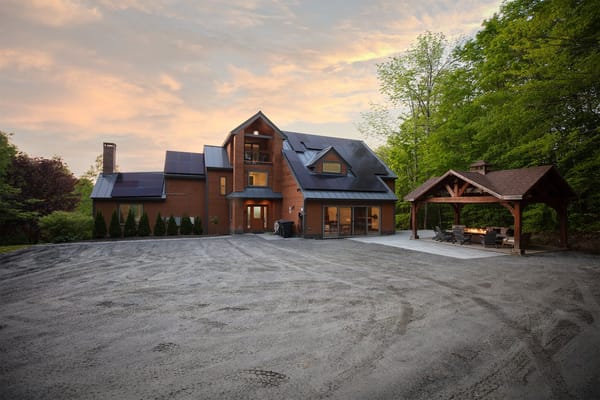
We manage two properties near Stratton Mountain: Whispering Pines Lodge (5 bedrooms, pool, hot tub, sauna, sleeps 10) and Stratton Chalet (3 bedrooms, hot tub, sauna, stone fireplace, sleeps 6, from $202/night).
Both consistently rank among the highest-occupancy and highest-rated Airbnb listings in the Stratton area. We know exactly what properties in this market earn at each bedroom count and amenity level, because we track it.
We're not going to publish specific gross revenue numbers for our owners' properties — that's their data. But we can give you honest benchmark estimates for your specific property type, location, and amenity set. Not inflated projections designed to win your business. Realistic numbers based on actual market performance.
We also handle Vermont's STR tax compliance in-house — meals and rooms tax, local option taxes, monthly filings — with expert-level bookkeeping that most management companies don't offer. It's not glamorous, but it's the kind of thing that saves owners real money and real headaches.
If you want to know what your Vermont property could realistically earn under professional management, we'll tell you — including the honest answer if we don't think the numbers work in your favor.
Get a free property estimate. We'll tell you what your Vermont property could realistically earn under professional management — and whether working together makes sense for your situation. Request your free estimate here.
Browse topics: STR Management · Vermont