Should I Airbnb My Vermont Property? An Honest Owner's Guide
Not every Vermont property makes a good short-term rental. Here's the honest framework — what properties actually earn near Stratton, what it costs to operate, and how to decide.
Should I Airbnb My Vermont Property? An Honest Owner's Guide
You've probably run the numbers in your head. Maybe you've looked at nearby listings on Airbnb and thought: if they're charging $350 a night, and I have the same size house, and Vermont is popular...
Maybe. But the honest answer is that it depends on things most "should I Airbnb?" articles won't tell you. So here's the version without the hype.
The Honest Answer
Not every Vermont property makes a good short-term rental. That's the truth, and it's worth saying upfront before you invest time and money finding out the hard way.
Location relative to Stratton Mountain (or another ski resort) determines your ceiling. Amenities determine how close you get to that ceiling. Your ability to manage the operation — or your willingness to hire someone who can — determines whether you actually earn what the market says is possible.
All three things need to be in place. One out of three doesn't get you there.
This guide isn't designed to convince you to list your property. It's designed to help you think through whether you should — and if so, what it actually takes to do it well.
What Vermont STR Properties Actually Earn
Here are realistic benchmark ranges for properties in the Stratton area. These aren't optimistic projections — they're what professionally managed, well-presented properties with good photography and dynamic pricing actually earn.
- 3-bedroom with hot tub, within 15 minutes of Stratton: $45,000–75,000/year gross revenue
- 4-bedroom with hot tub and sauna, within 15 minutes: $65,000–95,000/year
- 5-bedroom with pool, hot tub, sauna, within 15 minutes: $80,000–120,000/year
- 3-bedroom without hot tub, 30+ minutes from Stratton: $20,000–40,000/year
Distance matters more than most people realize. Vermont ski rental guests are driving from Boston, New York, and New Jersey. They're already making a long drive — the difference between 10 minutes from the mountain and 30 minutes feels significant to them when they're tired and unloading gear in the dark. Properties closer to Stratton consistently command higher rates and higher occupancy.
Amenities matter because the Vermont STR guest is often choosing between several comparable houses in the same area. The one with the hot tub and sauna gets booked first, at higher rates, by guests who leave better reviews. This is not theoretical — it shows up clearly in the booking data.
The Costs Most Owners Underestimate
Gross revenue is the number that gets quoted. Net revenue is the number that matters. The gap between them is often larger than owners expect when they're first doing the math.
Startup costs:
- Professional photography: $400–800 (or included if you use a management company that provides it)
- Initial deep clean and guest-ready staging: $200–500
- Linens, towels, and supplies for guest turnover: $500–1,500 depending on property size
- Small repairs and improvements that guest scrutiny will require: variable, but assume $500–2,000 for most properties
Ongoing operating costs:
- Cleaning per turnover: $150–300 for a typical Vermont STR. In peak season with multiple turnovers per week, this adds up fast.
- Supplies replenishment (toiletries, paper products, coffee): roughly $20–40 per turnover
- Minor maintenance: budget 1–2% of gross revenue annually for small repairs, appliance issues, hot tub maintenance
- Property damage: expect roughly 1–3% of gross revenue annually. Most guests treat properties well, but wear and tear is real, and occasional damage happens.
- Platform fees: Airbnb charges hosts approximately 3% and guests 14–15%. Combined, roughly 15–18% of gross booking value leaves the platform as fees.
- Management fees if using a manager: typically 20–30% of gross revenue for full-service management in Vermont
- Vermont Meals and Rooms Tax: 9% + 1% STR surcharge, collected on each booking and remitted to the state monthly
- Local option taxes if your town levies them: varies by municipality
Run the actual math. A property earning $70,000 gross, with $14,000 in platform fees, $17,500 in management fees, $8,000 in cleaning, $2,000 in maintenance and supplies, and $7,000 in taxes is generating roughly $21,500 in net income before your mortgage, insurance, and property taxes. That may still be excellent — or it may be less exciting than the gross number suggested.
Know which number you're actually talking about before you make a decision.
The Time Commitment of Self-Management
People consistently underestimate this, so here's an honest estimate: self-managing a Vermont STR during peak season takes 15–25 hours per week.
That includes responding to booking inquiries (Airbnb's algorithm rewards fast response — delays hurt your ranking), pre-arrival messaging, coordinating cleaners between turnovers, doing or supervising inspections after each turnover, handling maintenance issues as they arise, and responding to guest questions and problems during stays.
Guest questions come at all hours. A guest locked out at 10 PM on a Saturday isn't going to wait until Monday morning. A hot tub that's not heating properly gets messaged about immediately. A slow drain in the shower gets a message the first morning of a stay.
Vermont's remoteness amplifies this. If you live 45 minutes away, a quick trip to deal with a maintenance issue is two hours round-trip plus whatever time the fix takes. In February, with a snowstorm on the road, it's more than that.
This isn't a reason not to self-manage. It's information you need to honestly assess whether you're set up to do it well.
Vermont STR Regulations You Need to Know
Vermont's STR regulatory environment has gotten more complex in recent years, and more changes are likely. Here's what's currently in effect:
Vermont Meals and Rooms Tax: 9% state tax plus a 1% short-term rental surcharge applies to all STR bookings. If you book through Airbnb, Airbnb collects and remits the state tax automatically. If you take direct bookings outside the platform, you are responsible for collecting and remitting it yourself through a Vermont Business Tax Account.
Local option taxes: Some towns levy additional local option taxes on top of the state rate. Winhall (where Stratton Mountain is located) is one of them. Check your specific municipality.
Town zoning and land use: Vermont has no statewide STR licensing law as of 2026, but towns can and do regulate short-term rentals under local zoning ordinances. Some towns require registration, some limit STRs in certain zones, and some are in the process of developing regulations. Check your town's current ordinances before listing.
HOA restrictions: If your property is in a condominium association or planned development, check your HOA documents carefully. Many Vermont ski-area condo associations restrict or prohibit STR use, and some have added restrictions in recent years.
Income reporting: STR income is taxable at both the state and federal level. Keep clean records. If you don't have a system for this, build one before you start — retroactive bookkeeping is painful.
What Makes a Vermont STR Property Succeed
The properties that consistently earn top dollar near Stratton have a recognizable set of characteristics. This isn't secret knowledge — it's observable in the booking data.
- Proximity to Stratton: Within 15–20 minutes is the premium tier. 20–30 minutes is competitive. Beyond 30 minutes, you're fighting for a different, smaller audience.
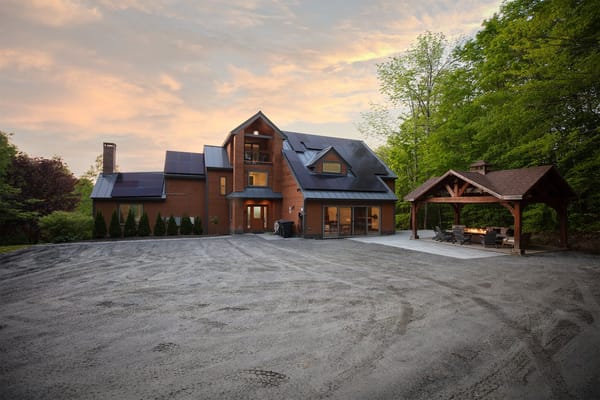
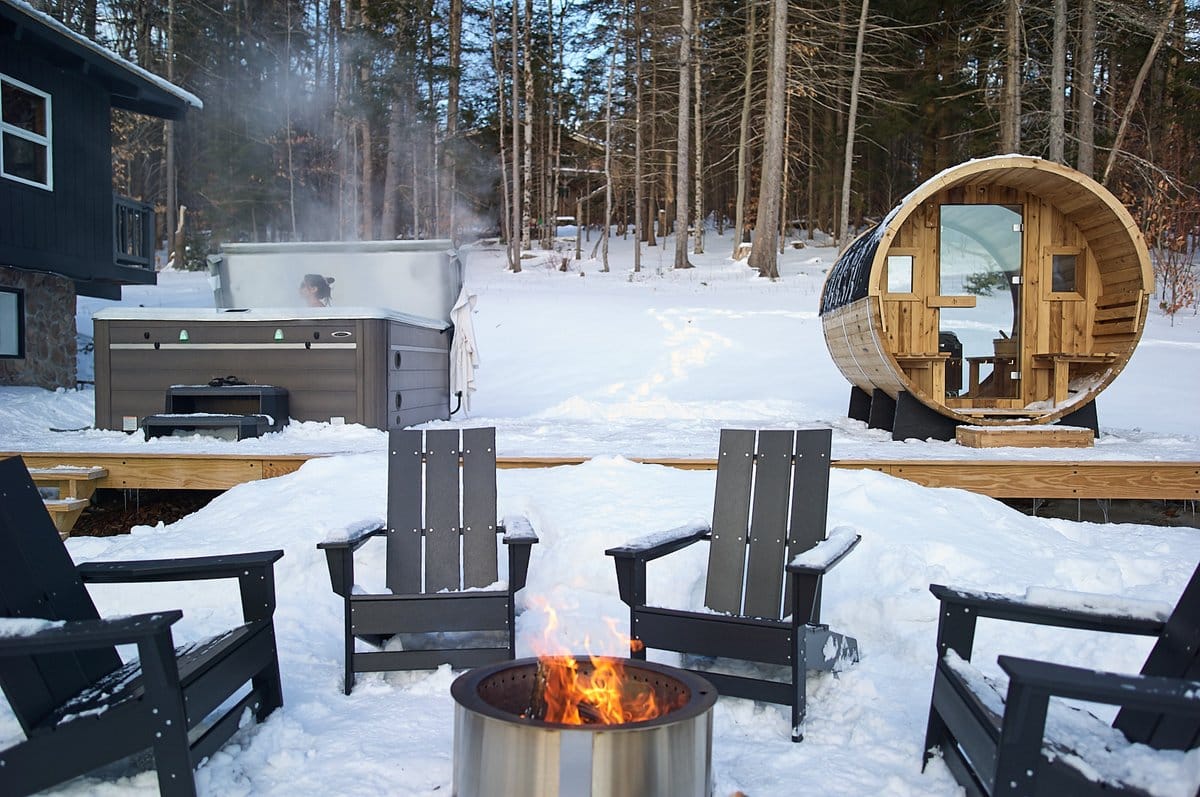
- Hot tub: Near-essential for premium rates in the Vermont ski market. Guests who are spending $300–500/night expect it, and the absence is noted in reviews.
- More than 2 bedrooms: Groups drive the highest per-night rates. A 4-5 bedroom property rented to a group of 8–10 earns at a completely different level than a 2-bedroom rented to couples.
- Professional photography: The single highest-ROI investment most owners can make. Properties with professional photos book faster and at higher rates. No exception.
- Responsive, 24/7 management: Fast response drives better reviews. Better reviews drive search visibility. Search visibility drives bookings. It compounds.
- Dynamic pricing: Presidents' Week rates should be 3–4x your base rate. If you're running a flat rate, you're leaving real money on the table.
Properties that struggle have the inverse: too far from the mountain, no hot tub, iPhone photography, slow response times, flat pricing. Each is fixable. Together, they're a recipe for disappointing results.
The Decision Framework
Answer these questions honestly:
- Is my property within 20 minutes of Stratton Mountain? If not, the revenue potential is meaningfully lower. Still possibly worth it, but know that going in.
- Does it have (or can I add) a hot tub? If not, can you install one? The math on a hot tub addition almost always works for properties with meaningful rental potential.
- Can I handle 24/7 guest communication, or do I need a manager? Be honest. "I'll do my best" isn't a system.
- Am I prepared for Vermont's STR tax compliance requirements? Monthly filings, separate accounting, local option taxes — this is real administrative work.
- Is this income I need, or a nice-to-have? If you need it, the time and stress of self-management during peak season may be acceptable. If you don't need it, the calculus on professional management shifts.
- Would I be genuinely comfortable with strangers in my home regularly? Some owners are fine with this. Some aren't, and discover it after the first few bookings. There's no wrong answer, but know yourself.
If you answered yes to 1–3 and have reasonable answers for 4–6, you have a potentially strong STR on your hands.
The Case for Professional Management
Let's do the math on the management fee question honestly, because most owners think about it the wrong way.
The wrong way: "A management company takes 25% — that's too much. I'll do it myself and keep all the revenue."
The right way: "A management company charges 25%. If they can move my occupancy from 45% to 65%, what does that do to my net income?"
On a property earning $350/night average: moving from 45% to 65% occupancy is an additional $25,550 in gross revenue. At 25% management fee, you pay an additional $6,388 in fees on the new revenue. Net gain: roughly $19,000 annually — before accounting for the value of your time.
If your time is worth anything — and if you have a job, it is — the math almost always favors professional management for Vermont STR owners who don't live nearby.
What good professional management actually includes: dynamic pricing, professional photography (ideally included in onboarding), 24/7 guest communication, cleaning coordination and quality control, maintenance oversight, multi-platform listing management, and in-house STR tax compliance and accounting. That last piece — the tax and bookkeeping work — is genuinely difficult to find from a Vermont STR manager. We do it with an in-house accounting expert doing bank-reconciled bookkeeping, because the alternative (owners scrambling to file their own M&R taxes and track their own income correctly) causes real problems.
Getting a Realistic Estimate for Your Property
The most useful thing you can do before making any decisions is get a realistic, property-specific income estimate.
Not the kind that gets inflated to win your business. The kind that accounts for your actual bedroom count, actual location relative to Stratton, actual current amenities, and actual condition of the property. The kind that also tells you what it would cost to close the gap between what your property earns now and what it could earn with improvements.
We do free property estimates. We'll tell you what your property could realistically earn under professional management in the current Stratton market — and we'll tell you honestly if we don't think the numbers work in your favor. We'd rather have that conversation upfront than manage a property that can't perform at a level that makes the relationship worthwhile for either of us.
If you're genuinely interested in what your Vermont property could earn — as an Airbnb, with professional management, with honest numbers — we're happy to talk.
Get a free, honest estimate for your Vermont property. We'll tell you what it could realistically earn — and whether professional management makes sense for your situation. Request your free estimate here.
Browse topics: STR Management · Vermont