
When you're shopping for a luxury vacation rental on Stratton Mountain or in southern Vermont, the amenity list can feel endless. Sauna? Pool? EV charging station? Wine fridge? Heated driveway? The question isn't what sounds nice—it's what actually justifies the investment and delivers genuine value to your guests and your bottom line.
After years of managing boutique vacation rentals across Winhall, Bondville, Manchester, and the greater Stratton area, we've learned which luxury amenities truly move the needle on booking rates, guest satisfaction, and revenue—and which ones drain your operating budget while sitting idle most of the year.
Let's break down the top contenders honestly.
The Big Three: Sauna vs. EV Charger vs. Pool
These are the amenities we hear about most often from property owners considering upgrades. Each has real appeal, real costs, and real trade-offs. Here's how they stack up:
| Amenity | Installation Cost | Annual Maintenance | Booking Premium | Guest Demand (Summer) | Guest Demand (Winter) | Best For |
|---|---|---|---|---|---|---|
| Sauna | $4,000–$8,000 (indoor) $8,000–$15,000 (outdoor) |
$300–$600/year | 8–12% nightly rate increase | Moderate | High | Year-round appeal; wellness-focused guests |
| EV Charger | $1,500–$3,500 (Level 2) $5,000–$10,000 (hardwired install) |
$100–$200/year | 5–8% nightly rate increase | Growing demand | Growing demand | Future-proofing; attracts affluent eco-conscious travelers |
| Pool | $25,000–$50,000+ (in-ground) $3,000–$8,000 (saltwater above-ground) |
$2,000–$4,000/year | 10–15% nightly rate increase | Very high | Low (seasonal closure required) | Summer destination rentals; families with children |
The Sauna: The Quiet Overachiever
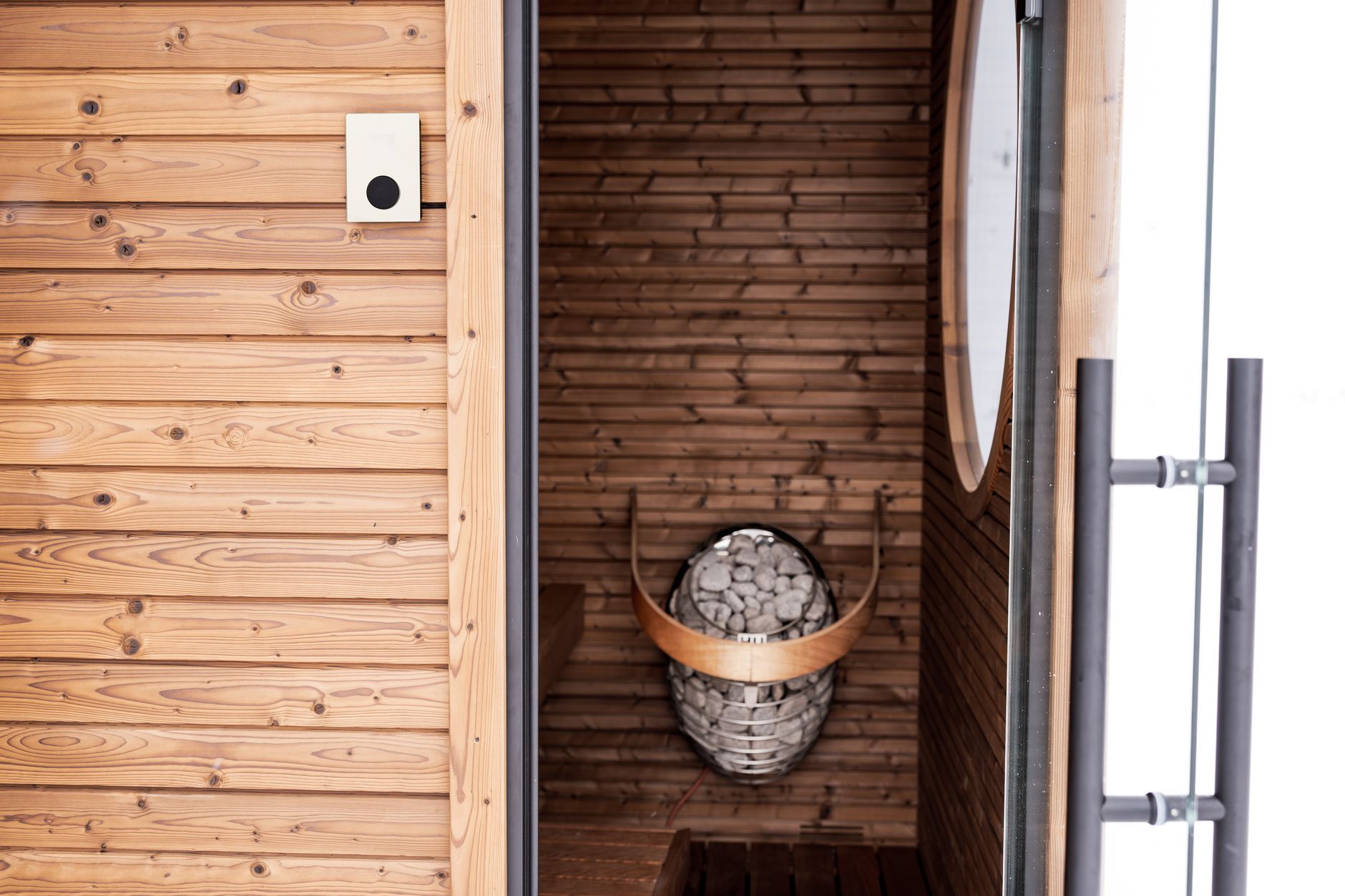
In our experience managing properties across southern Vermont, saunas punch above their weight. Here's why:
Year-round relevance: Winter guests love a sauna after a day on Stratton Mountain's slopes. Summer guests appreciate it as a wellness feature. Spring and fall visitors? They're booking for foliage and peace—a sauna adds to that retreat experience.
Low operational friction: Unlike pools, saunas don't require chemical balancing, lifeguard liability insurance, or seasonal closing. An outdoor sauna in Vermont needs a roof and proper drainage, but that's it. Indoor saunas are even simpler—plug in, heat up, done.
The catch: An outdoor sauna on a Stratton-area property means dealing with Vermont snow loads, freeze-thaw cycles, and the reality that guests might not use it when it's -10°F and they'd rather be inside. An indoor sauna requires dedicated space (typically 50–100 sq ft) and proper ventilation.
Our take: If you have the space and your property sits on 2+ acres with mature trees (common in Winhall and Bondville), an outdoor sauna is worth the investment. It differentiates your listing, appeals to affluent travelers seeking wellness experiences, and maintains appeal across all seasons.
The EV Charger: The Future-Proofing Play
Electric vehicle adoption in New England is accelerating. Vermont saw a 35% year-over-year increase in EV registrations in 2023. By 2025, we're seeing guests specifically filter vacation rental searches for EV charging capability.
The real cost picture: A Level 2 charger (240V) costs $1,500–$3,500 installed, assuming your electrical panel has capacity. If it doesn't, add $2,000–$4,000 for an electrician to upgrade. This is where southern Vermont properties sometimes struggle—older homes in Manchester, Bondville, and even newer builds on Stratton may have limited service capacity.
The booking reality: Right now (2024), an EV charger attracts a small but high-value audience. These guests tend to be affluent, stay longer, and book year-round. They're also less price-sensitive than average vacation renters. A 5–8% rate premium is realistic and sustainable.
The catch: If your target market is families driving gas-powered SUVs from Boston or families visiting Stratton Mountain for skiing, an EV charger won't move the needle much yet. Its value is in future-proofing and capturing an emerging, high-quality guest segment.
Our take: If your property is newer, your electrical panel is modern, and your market positioning is "luxury wellness retreat" rather than "family-friendly ski lodge," an EV charger makes sense. It's also one of the few amenities that may qualify for tax credits or rebates in Vermont, which can improve ROI.
The Pool: The Heavy Hitter (With Heavy Caveats)
Pools sell summer vacation rentals like nothing else. Families with children see a pool and book immediately. A high-quality pool can command a 10–15% premium and fill your calendar June through August.
The hidden costs: Here's what property owners often underestimate:
- Seasonal closing and opening: In Vermont, you're looking at $500–$1,000 per season, every year.
- Chemical maintenance: $1,500–$3,000 per season if you hire a pro (recommended); $500–$1,000 if you do it yourself and actually show up weekly.
- Equipment repair: Pumps, filters, and heaters fail. Budget $500–$2,000 annually for unexpected repairs.
- Liability insurance: Your homeowner's policy likely won't cover a rental property pool. Expect an additional $800–$1,500/year in liability coverage.
- Local ordinances: Vermont doesn't have statewide pool regulations, but individual towns (including Winhall, where Stratton sits) may require fencing, permits, or inspections. Budget an additional $2,000–$5,000 if your property isn't already compliant.
The seasonal problem: Vermont's pool season is June 15 through September 15—that's 13 weeks. For 39 weeks of the year, your pool is a sunk cost generating zero revenue. If your property attracts winter or shoulder-season guests (and many Stratton-area properties do), a pool is deadweight nine months annually.
Our take: Pools make sense only if:
- Your primary market is families visiting June–August.
- Your property is positioned as a summer destination, not a year-round retreat.
- You're comfortable with a pool-only revenue model (higher rates for fewer months).
- You have a backup plan for liability and maintenance coordination.
For Stratton Mountain properties that thrive in winter and foliage season, a pool is usually a distraction from your core market.
The Secondary Tier: Hot Tub, Sauna, Steam Shower
These are lower-cost alternatives that solve similar problems with fewer operational headaches:
- Hot tub: $3,000–$8,000 installed. Maintenance is ongoing ($50–$100/month), but it's manageable. Year-round appeal. Guests book it for both winter relaxation and summer entertaining. We see a 6–10% rate premium.
- Steam shower: $2,000–$4,000 installed. Minimal maintenance. Positioning is "luxury spa" rather than "recreational." Appeals to wellness-focused guests. 5–7% rate premium.
- Outdoor hot tub on a deck: The sweet spot for many properties. Guests love the contrast of warm water in cool air. Installation is $3,500–$6,000. Durability in Vermont's climate is 10–12 years with proper maintenance.
Honestly? A hot tub often delivers better ROI than either a sauna or a pool, especially for year-round properties in southern Vermont.
The X-Factor: Photography and Presentation
Here's something guests don't always say but definitely feel: a property with stunning luxury amenities but mediocre photography won't book. The reverse is also true—a property with modest amenities but exceptional photography will outperform expectations.
Before spending $10,000 on a sauna, invest $1,500–$2,500 in professional vacation rental photography. It will pay for itself in your first month of improved bookings. Your guests can't experience that sauna or EV charger if they
Related reading
- Vermont Luxury Cabins with Private Pool, Hot Tub, and Sauna: What to Expect
- Bondville, Vermont Vacation Rentals: The Local's Guide
- Bondville, Vermont Vacation Rentals: The Local's Guide
- Dynamic Pricing for Vermont Vacation Rentals: How It Works (and Why It Matters)
- Large Group Vacation Rentals in Vermont: Cabins That Sleep 10 or More Near Stratton