If you own land or a home near Stratton Mountain, or you're thinking about buying in the Winhall, Bondville, or Manchester area, you've probably wondered: what kind of return can I actually expect from a short-term rental? The answer isn't simple, but it's answerable—and it's a lot better if you know what you're really looking at financially.
Cap rates matter. They cut through the marketing noise and tell you whether a property investment makes sense. In southern Vermont, where seasonal tourism drives rental income and property values remain relatively stable, understanding your cap rate isn't just smart—it's essential. This guide walks you through real numbers, Vermont-specific costs, and the honest metrics that will help you decide whether buying near Stratton Mountain for short-term rental income is worth your capital in 2026.
What Is a Cap Rate, and Why Does It Matter for Vermont STRs?
A capitalization rate (cap rate) is your property's annual net operating income divided by its purchase price. It tells you what percentage return you'll earn each year from operations alone, before mortgage payments, taxes, and appreciation.
For example, if you buy a property near Stratton for $400,000 and it generates $40,000 in net operating income annually, your cap rate is 10%.
Cap Rate = Net Operating Income ÷ Purchase Price
In Vermont's short-term rental world, cap rates typically range from 4% to 12%, depending on location, property condition, management efficiency, and how you define "net." That's a wide range for a reason: a cabin in Bondville that runs itself generates a very different return than a property requiring constant owner attention.
Cap rates matter because they let you compare one property to another fairly, and they reveal whether the deal is strong enough to justify the risk and effort involved in managing a vacation rental in a seasonal market.
The Stratton Mountain Market: Why Location Drives Everything
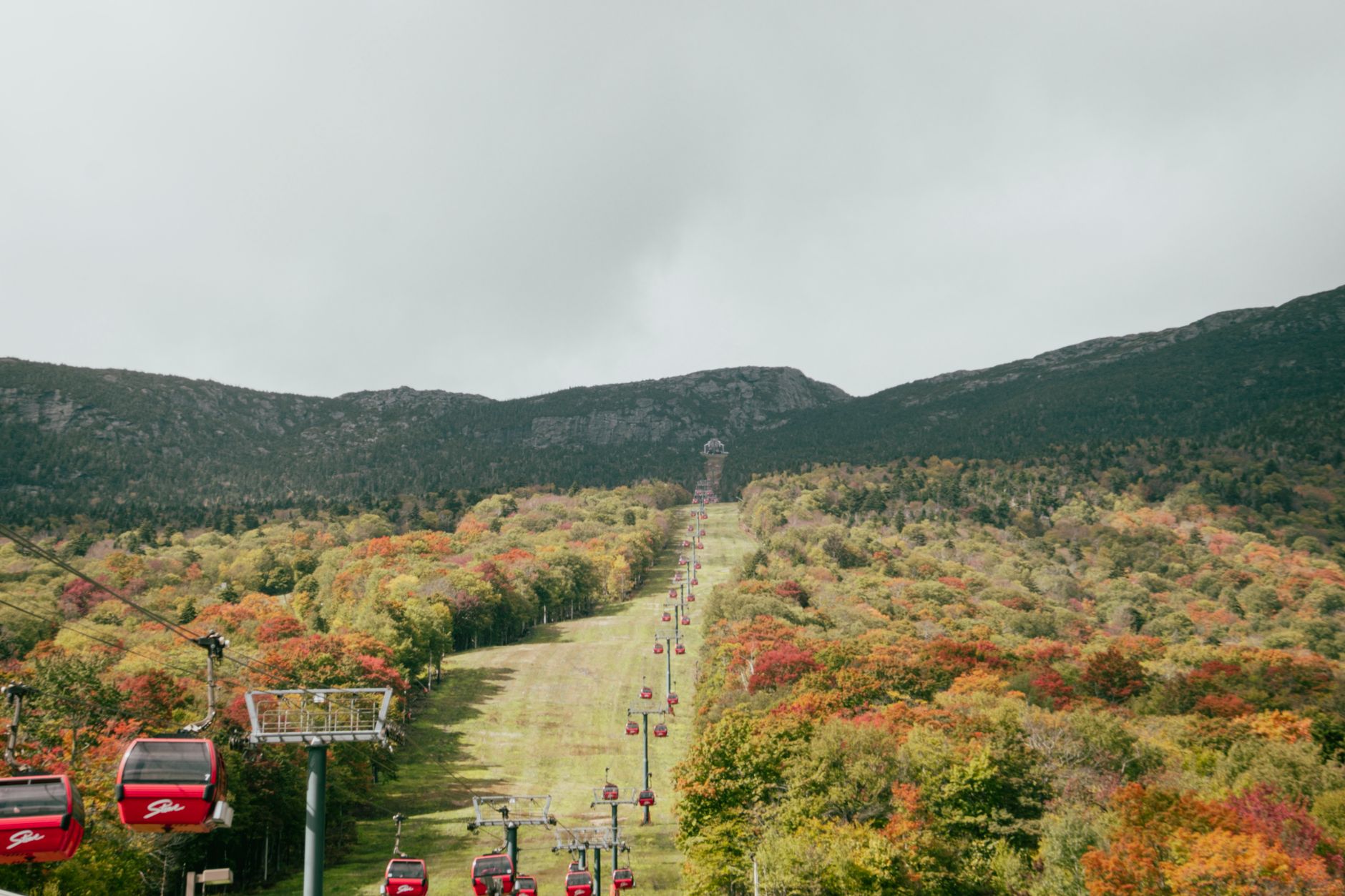
Stratton Mountain isn't just a ski resort—it's the economic engine of southern Bennington County. During winter (December through March), the mountain attracts families, groups, and serious skiers from Boston, New York, and beyond. Summer brings golf, hiking, and mountain biking. Fall and spring are quieter but still viable for leaf-peepers and outdoor enthusiasts.
Properties directly at or within a mile of Stratton command premium rates and higher occupancy. A three-bedroom near the base can rent for $350–$450 per night in winter and $200–$300 in summer. Farther out—say in Winhall or Bondville—you're looking at $200–$300 winter and $120–$180 summer, but your purchase price and property taxes are lower.
This matters hugely for cap rates. A $500,000 property at Stratton that rents for $400/night might generate the same gross income as a $300,000 property in Bondville renting for $280/night. But the cap rate on that Bondville property will look significantly stronger because you're dividing a similar income by a smaller purchase price.
Running the Real Numbers: What Does an STR Actually Generate in Southern Vermont?
Let's build two realistic scenarios based on properties we manage through Far & Away Homes' vacation rental management services.
Scenario 1: Stratton Base Area Property (3 bed / 2 bath)
- Purchase Price: $475,000
- Winter Rate (16 weeks, Dec–Mar): $400/night, 85% occupancy
- Summer Rate (12 weeks, Jun–Aug): $250/night, 70% occupancy
- Shoulder Seasons (Spring/Fall, 24 weeks): $180/night, 55% occupancy
Annual Gross Revenue:
- Winter: 112 days × $400 × 0.85 = $38,080
- Summer: 84 days × $250 × 0.70 = $14,700
- Shoulder: 168 days × $180 × 0.55 = $16,632
- Total Gross: $69,412
Scenario 2: Winhall/Bondville Property (3 bed / 2 bath)
- Purchase Price: $320,000
- Winter Rate: $280/night, 80% occupancy
- Summer Rate: $160/night, 65% occupancy
- Shoulder Seasons: $120/night, 50% occupancy
Annual Gross Revenue:
- Winter: 112 days × $280 × 0.80 = $25,088
- Summer: 84 days × $160 × 0.65 = $8,736
- Shoulder: 168 days × $120 × 0.50 = $10,080
- Total Gross: $43,904
Now here's where reality sets in. Gross revenue isn't what you keep.
Vermont STR Operating Costs: The Full Picture
If you're serious about cap rates, you need to account for every cost that keeps your property operational. Here's what actually comes out of that revenue:
| Cost Category | Stratton Property | Winhall Property | Notes |
|---|---|---|---|
| Property Management | $8,330 (12%) | $5,270 (12%) | Professional STR management includes guest communication, cleaning coordination, maintenance liaison |
| Cleaning & Turnover | $3,500 | $2,200 | Deep cleans between guests at $150–$200 per turnover |
| Maintenance & Repairs | $2,500 | $1,800 | Budget 3–5% of gross for seasonal fixes, appliance wear |
| Property Tax | $4,800 | $2,560 | Vermont avg. ~1% of property value; STR rates vary by town |
| Insurance (STR-specific) | $2,400 | $1,600 | Standard homeowners insurance doesn't cover STRs; expect $25–$35/month per $100k value |
| Utilities | $2,200 | $1,400 | Seasonal variance; winter heating is significant in Vermont |
| Supplies & Linens | $1,800 | $1,000 | Replacements, guest amenities, kitchen supplies |
| Listing & Marketing | $1,200 | $800 | Airbnb/VRBO commission, photography refresh, local advertising |
| Vermont Rooms Tax (9.6%) | $6,663 | $4,215 | State-mandated; you collect and remit |
| Accounting & Tax Services | $1,500 | $1,200 | Critical for STR accounting and tax compliance |
| TOTAL OPERATING COSTS | $34,993 | $22,045 |
Net Operating Income (NOI):
- Stratton property: $69,412 – $34,993 = $34,419
- Winhall property: $43,904 – $22,045 = $21,859
Cap Rate Comparison: Location vs. Value
Now we can calculate actual cap rates:
| Metric | Stratton | Winhall |
|---|---|---|
| Purchase Price | $475,000 | $320,000 |
Related guides for Vermont STR owners