If you own a property near Stratton Mountain or anywhere in southern Vermont, you've probably wondered the same thing every other property owner asks us: When do I actually make money?
The honest answer isn't as simple as "summer is peak season." Vermont's short-term rental income varies dramatically by season, and understanding those patterns—before you buy, before you list, or before you adjust your strategy—can mean the difference between a property that barely covers its mortgage and one that generates meaningful income year-round.
After managing dozens of properties across Stratton, Winhall, Bondville, and Manchester, we've watched the real numbers play out across every season. This guide breaks down exactly when vacation rental income flows, what drives those patterns, and how to position your property to capture income across all four seasons.
The Vermont Vacation Rental Year: An Overview
Southern Vermont has two genuine peak seasons and two transitional periods. Unlike Florida or Colorado, Vermont doesn't have a single dominant season—instead, income flows from different types of guests in different months, each with distinct booking patterns and willingness to pay.
The quick version: winter (ski season) and fall (foliage) generate your highest nightly rates and strongest occupancy. Summer fills with families and mid-week bookings. Spring is the slowest quarter but manageable if your property is positioned correctly.
Here's the detailed seasonal breakdown:
Winter: The Ski Season Goldmine (December–March)
Winter is Stratton Mountain's season, which means winter is your season.
This is when nightly rates spike hardest and occupancy climbs toward 80–95% if your property is well-maintained, professionally photographed, and priced strategically. We're talking about the holiday weeks (December 20–January 2), Presidents' Day weekend, and any Friday-to-Sunday stretch from mid-December through March.
The numbers:
- Peak holiday weeks: $250–$450 per night for a 2–3 bedroom property near Stratton
- Regular winter weekends: $180–$280 per night
- Winter weekdays: $120–$180 per night
- Typical occupancy: 70–85%
Winter income is driven by ski traffic—locals, regional visitors, and destination travelers who book months in advance. The Stratton Mountain Resort operates mid-November through late March, and while early and late season skiing is less reliable, holiday bookings are iron-clad.
One critical detail: Vermont properties near ski resorts see their winter tax liability spike. Make sure you're setting aside 25–30% of winter income for Vermont state income tax, federal self-employment tax, and local property taxes. Our STR accounting guide walks through the specifics for short-term rental operators.
Winter peak: December 20–January 2 and Presidents' Day week are non-negotiable revenue drivers. Book a property near Stratton, and these 3–4 weeks alone can cover 30–40% of your annual income.
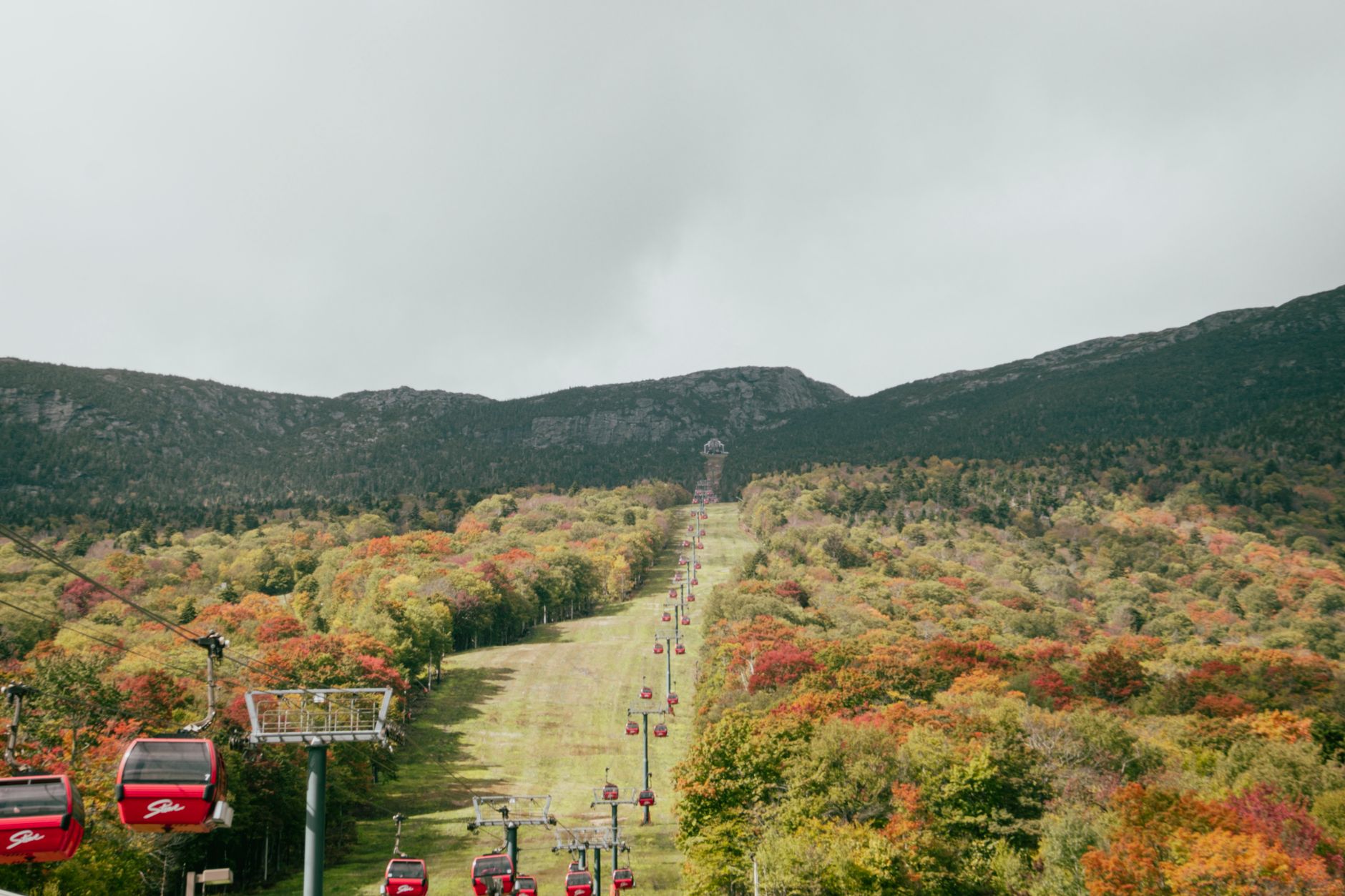
Fall Foliage: The Second Peak (September–October)
October in Vermont is magic, and it's also when your phone rings non-stop.
Foliage season draws leaf-peepers from New York, Boston, Connecticut, and beyond. Peak foliage (typically the second and third weeks of October) generates rates and occupancy that rival ski season, sometimes even exceeding it on a per-night basis because foliage visitors tend to book Thursday-to-Sunday getaways.
The numbers:
- Peak foliage weekends (mid-late October): $240–$400 per night
- September (early fall): $140–$200 per night
- Late October (post-peak): $160–$250 per night
- Typical occupancy: 75–90% on weekends; 40–60% weekdays
The foliage season is shorter and more compressed than winter—you're really looking at 4–5 weeks of premium pricing—but it's predictable. Properties in scenic locations (Bondville, near the Green Mountains, or with mountain views) command higher rates than those in valley locations.
One advantage of foliage season: your operating costs are lower than winter. Heating bills are minimal, and wear-and-tear is easier on furnishings and systems. That means your profit margin is often higher in October than it is in January, even if the nightly rate is similar.
Summer: Steady, Predictable, Lower-Rate Income (June–August)
Summer is the most misunderstood season for Vermont property owners. It's not a peak season by rate, but it's steady, predictable, and often more profitable per month than you'd expect because occupancy is consistent.
The numbers:
- Summer weekend rates: $150–$230 per night
- Summer weekday rates: $100–$160 per night
- Typical occupancy: 50–70% across the month
- Average monthly occupancy: 55–65% (more stable than you'd think)
Summer guests are families, couples on extended stays, and people fleeing heat in the city. They book shorter stays (3–5 nights) and fill mid-week slots. A property that averages 60% occupancy in July at $130/night generates roughly $2,340 in revenue that month—less spectacular than a single October weekend, but reliable.
Summer is also when you should schedule maintenance and deep cleaning between guests. Unlike winter, when turnovers happen fast and you can't afford downtime, summer allows you to block off a few days for repairs, HVAC servicing, and refreshes. Build that into your occupancy expectations.
Note: Properties marketed specifically for families (games, decks, proximity to activities, washer/dryer) do 15–25% better in summer than generic mountain cabins.
Spring: The Valley (April–May)
Let's be honest: spring is slow.
April and May sit between ski season and summer, between foliage and family vacation patterns. Spring in Vermont is muddy, unpredictable weather-wise, and lacks a clear market draw. You'll see occupancy drop to 25–45%.
The numbers:
- Spring weekend rates: $110–$170 per night
- Spring weekday rates: $80–$130 per night
- Typical occupancy: 25–45%
Spring is your maintenance season. Schedule deep cleans, repairs, equipment replacements, and professional vacation rental photography updates during April and May. You're not losing much income by blocking dates—you'd only fill 30% of them anyway.
Spring can be improved with targeted marketing to families planning early summer getaways or couples looking for a quiet off-season retreat. Properties near hiking trails, farms, or with special amenities (hot tubs, fire pits) perform better in spring than generic offerings.
Seasonal Income Comparison: What a Real Property Earns
Here's a practical example: a 3-bedroom home in the Stratton area, priced strategically and well-maintained.
| Season | Avg. Nightly Rate | Avg. Occupancy % | Days in Season | Monthly Income (Avg.) | Quarterly Total |
|---|---|---|---|---|---|
| Winter (Dec–Feb) | $200 | 80% | 90 days | $4,800 | $14,400 |
| Spring (Mar–May) | $130 | 35% | 90 days | $1,365 | $4,095 |
| Summer (Jun–Aug) | $140 | 60% | 92 days | $2,520 | $7,560 |
| Fall (Sep–Oct) | $220 | 75% | 61 days | $4,950 | $9,900 |
Annual gross rental income: ~$35,955
Before you get too excited: that's gross revenue. Subtract property management fees (12–20%), cleaning between guests, utilities, maintenance, property taxes, and insurance. Net income typically runs 35–55% of gross revenue, depending on how efficiently you manage the property and how much work you do yourself versus outsourcing.
In this example, net annual income would likely be $12,500–$19,800—still excellent for a second home or investment property,
Related guides for Vermont STR owners