The good news: Vermont does not have a statewide short-term rental license requirement. You don't need to apply to the state for permission to rent your property on Airbnb or VRBO.
The less simple news: that doesn't mean there's nothing to do. Between local town ordinances, state tax registration, fire safety requirements, and wastewater considerations that are specific to older Vermont properties, there's a real compliance checklist to work through before your first guest checks in. Getting this right protects you legally and keeps the property running without interruption.
Here's what you actually need to know, organized practically.
No Statewide STR License — But Check Your Town
As of 2025, Vermont has not enacted a statewide short-term rental registration or licensing requirement. Several bills have moved through the legislature in recent years — driven primarily by housing availability concerns — but none have resulted in a blanket statewide STR registry.
What does exist is a patchwork of local regulations that varies significantly from town to town. If you're renting near Stratton Mountain, the relevant municipalities are Winhall (which includes Bondville and Stratton itself), Manchester, and surrounding towns in Bennington County.
Winhall and Bondville
Winhall has historically been relatively permissive toward short-term rentals, which is one reason the Stratton corridor has a deep inventory of vacation rental properties. That said, zoning bylaws and local ordinances do apply. Before listing a property in Winhall, confirm with the town office that the property's zoning district permits short-term rental use. Some areas near the resort have specific use designations that affect rental eligibility.
Winhall does not currently require a specific STR permit, but this is subject to change as Vermont municipalities continue to revisit their approaches. Check with the Winhall Town Office directly — the number is public and a quick call will confirm current requirements.
Manchester
Manchester has a more developed regulatory framework than many surrounding towns, in part because of its status as a regional commercial center. STR regulations in Manchester have been actively discussed and periodically updated. As of this writing, Manchester requires property owners to register short-term rentals with the town, and there may be zoning district limitations. The Manchester Planning and Zoning office can confirm current requirements.
Other Southern Vermont Towns
Bromley-area towns, Peru, Londonderry, and others in the region each have their own zoning frameworks. The safest approach is always to contact the town zoning administrator directly. Don't rely on what other hosts tell you, and don't assume that because a neighbor is renting, you're automatically cleared to do the same — zoning enforcement can be property-specific.
Vermont Meals and Rooms Tax Registration (Required)
This is non-negotiable. Any Vermont property rented for fewer than 30 consecutive days is subject to the Vermont Meals and Rooms Tax (MRT), currently 9%. You must register with the Vermont Department of Taxes as an MRT vendor before accepting your first booking.
Registration is straightforward — it's done through the Vermont Department of Taxes website and takes about 20 minutes. You'll receive a vendor account number that you use for quarterly filings.
The platform shortcut: If you're booking exclusively through Airbnb or VRBO, both platforms automatically collect and remit MRT on your behalf for those bookings. You still need to register as a vendor — the platforms remit on behalf of their hosts, not instead of their registration requirement — but your direct payment obligation may be zero if all your bookings come through platform channels.
Where it gets complicated: direct bookings, repeat guests paying you directly, or any booking made outside the platform requires you to collect and remit MRT yourself. If you ever take a booking outside Airbnb or VRBO, make sure you know how to handle the tax correctly.
We cover this in considerably more detail — including what counts as taxable revenue, how to handle the registration, and what to do if you're behind — in our Vermont STR tax guide.
Fire Safety Requirements
Vermont has no specific STR fire safety certification requirement at the state level (as of 2025), but common sense and your insurance policy both point in the same direction: your property needs to meet basic life safety standards before guests arrive.
Practically, this means:
- Smoke detectors: Required in every bedroom and on every floor. Vermont statute requires interconnected smoke alarms in new construction; rental properties should meet this standard at minimum.
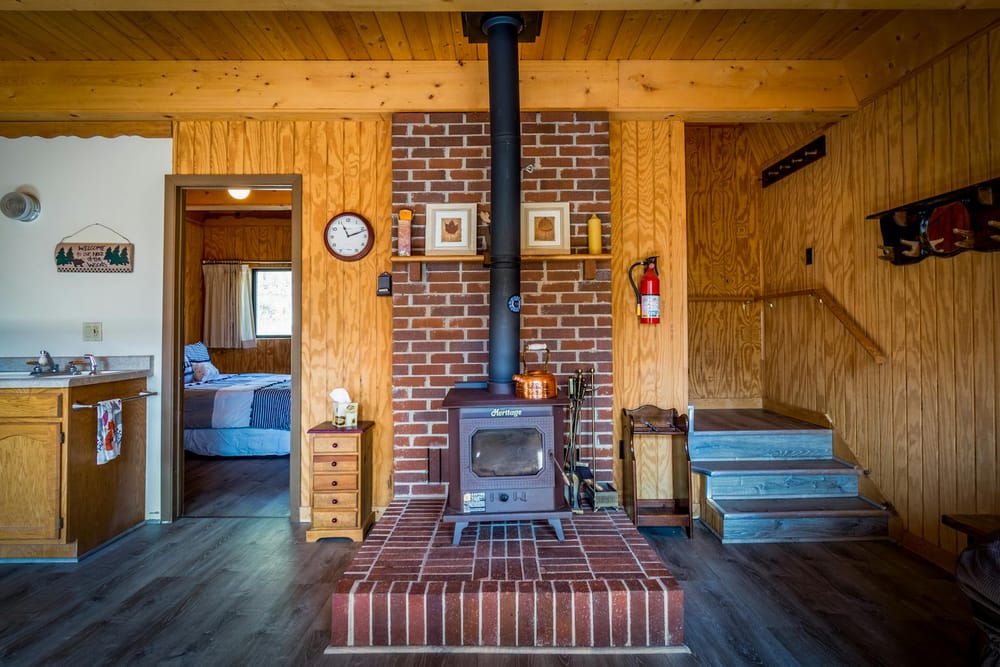
- Carbon monoxide detectors: Required in any Vermont rental property with fuel-burning appliances (gas stoves, furnaces, fireplaces, wood stoves). This covers virtually every Vermont vacation rental property.
- Fire extinguisher: Required within 10 feet of the kitchen. One per floor is better practice for larger properties.
- Egress: Every bedroom needs a functional egress window or door. Older Vermont properties occasionally have basement bedrooms or attic sleeping lofts that don't meet modern egress standards — this matters both for safety and for how you list the property's bedroom count.
- Emergency exit information: Post evacuation routes and emergency contact information prominently. Both Airbnb and VRBO require hosts to confirm basic safety equipment is in place.
If you're working with a property management company, they should conduct a safety walkthrough before the first booking. If you're self-managing, a few hundred dollars for a licensed home inspector to walk through the property with a safety focus is money well spent.
Septic and Wastewater: A Vermont-Specific Issue
This one catches more Vermont STR owners off-guard than almost anything else on this list.
A significant portion of southern Vermont vacation properties are served by private septic systems rather than municipal sewer. Vermont's Act 250 and wastewater regulations require that any property listed as having a certain number of bedrooms must have a septic system permitted and sized for that occupancy.
The practical problem: many older Vermont properties were built with septic systems sized for full-time residential use by a typical family. Renting the property to the maximum guest capacity implied by the bedroom count can put you in conflict with your permitted septic capacity — and in Vermont, this can create real regulatory exposure.
Before listing, check your property's Act 250 permit (if applicable) and septic permit. The permitted occupancy for your septic system should match or exceed the guest capacity you're advertising. If you're advertising an 8-person capacity on a system permitted for 4 people, you have a problem that needs to be resolved — either by getting the system re-evaluated, reducing your listed capacity, or addressing the system itself.
Winhall and Bennington County have building records accessible through the town office. This is worth pulling before your first listing goes live.
HOA and Deed Restrictions
If your property is part of a homeowners association — many Stratton-area properties are within resort-managed associations — check your HOA bylaws and CC&Rs before listing. Some associations prohibit or restrict short-term rentals, and HOA violations can result in fines, forced listing removal, and legal action regardless of what state law permits.
If you bought the property recently, your deed and title insurance documentation may include restrictions that weren't fully explained at closing. Worth a 20-minute review.
Pre-Listing Compliance Checklist
Use this before your first booking goes live:
- Confirmed with town zoning that STR use is permitted in your zoning district
- Registered with Vermont Department of Taxes as an MRT vendor
- Smoke detectors in every bedroom and on every floor — tested and functional
- Carbon monoxide detectors installed — every floor with fuel-burning appliances
- Fire extinguisher within 10 feet of kitchen
- All bedroom egress windows/doors functional and unobstructed
- Emergency exit information posted at property
- Septic permit reviewed — permitted occupancy matches or exceeds advertised guest capacity
- HOA bylaws reviewed — no STR prohibitions or restrictions
- STR-appropriate insurance policy in place (not standard homeowner's policy)
- If applicable: Manchester or other town STR registration completed
What About Future Regulation?
Vermont's STR regulatory environment is not static. Housing advocates, municipalities, and the state legislature have all shown interest in increasing oversight of short-term rentals over the past several years. It's reasonable to expect that Vermont will move toward more formal STR registration requirements in the coming years — possibly a statewide registry, possibly expanded local permit requirements in high-demand resort communities.
Staying compliant with current requirements and maintaining a good relationship with your neighbors and town officials is the best protection if and when new regulations arrive. Properties that are well-managed, not generating noise complaints, and operating transparently tend to face less friction from regulatory changes than properties that have been flying under the radar.
Getting It Right from the Start
The compliance steps above are all manageable, and none of them should stop a legitimately well-suited Vermont property from entering the rental market. The goal is to work through the checklist methodically before bookings begin — not to scramble through it after a guest has already checked in.
If you're figuring out whether your southern Vermont property is a good candidate for short-term rental, our guide on whether to Airbnb your Vermont property covers the bigger picture beyond compliance — market fit, revenue expectations, and what makes a property work versus struggle in this market.
And if you want to hand off the whole setup process — compliance walkthrough, listing setup, tax registration guidance, pricing strategy — that's something we handle for new properties we bring under management.
Get a free property estimate and we'll tell you what your property could earn and what it would take to get it market-ready.
Related reading
- Bank-Reconciled STR Statements: Why Most Vermont Airbnb Hosts Don't Have Them
- What Your Stratton-Area Property Actually Earns | Far & Away Income Guide
- Vermont STR Investment: Is Buying a Vacation Rental Near Stratton Worth It in 2025?
Related reading from Far & Away
- Vermont STR Registration by Town: Stratton, Winhall, Manchester, Bondville (2026)
- Vermont Act 137 and Short-Term Rentals: What the New Rules Mean
- Winhall, Vermont STR Permits: What Owners Must Know in 2026
- How to Stay Compliant as a Vermont Airbnb Host
Want everything we've written? Browse the full Vermont vacation rental library.
Related guides for Vermont STR owners