Most people searching for a vacation rental "near Stratton Mountain" are actually renting in Winhall or Bondville. These two towns sit directly around the mountain and make up the core of the Stratton rental market. If you own property here — or are considering buying — here's what you actually need to know before you list.
Winhall and Bondville: The Stratton Rental Market in Practice
Stratton Mountain Resort sits in the town of Winhall. Bondville is the small village at the base of the access road — the first town center guests pass through coming up Route 30 from Manchester. When Airbnb guests search "Stratton Mountain," they're pulling results from Winhall and Bondville almost exclusively.
This matters for owners because these towns have specific character, specific guest expectations, and increasingly, specific rules. A property 25 minutes away in Dover or Londonderry is a different market with different dynamics. Winhall and Bondville have the proximity premium — and the scrutiny that comes with it.
What Makes This Micro-Market Work for STRs
The core demand driver is simple: Stratton Mountain Resort. It's a major four-season destination — ski mountain in winter, mountain biking and hiking in summer, events and foliage in fall. The ski season alone (roughly late November through late March) generates 45–55% of annual rental income for most properties in this area. That's a powerful concentration of demand, and it creates real income potential for owners who manage their properties well.
Beyond the mountain, the surrounding landscape — Green Mountain National Forest, Stratton Pond, the Appalachian Trail — drives summer and shoulder-season demand that owners sometimes underestimate. Guests aren't just here to ski. In September and October, foliage demand spikes sharply, and well-positioned properties in Winhall can fill most weekends through leaf-peeper season.
Town Regulations: What You Need to Check Before You List
Vermont does not have a single statewide short-term rental law. Regulation is a patchwork of state tax requirements and local town ordinances, and the local piece varies significantly from town to town.
Winhall
Winhall has been more active on STR oversight than many Vermont towns. The town has been tracking short-term rental activity, and the regulatory environment is not static — what's true today may be more formal in 18 months. Before you list a Winhall property, call the town office or check with the town clerk to understand current requirements. Do not assume that because your neighbor is renting their place with no registration that there's nothing to comply with. Winhall is a small town with an engaged select board.
Bondville
Bondville is an unincorporated village within Winhall — so Winhall town regulations apply here too. Same guidance: check with the town clerk before listing.
The broader Vermont regulatory picture — including what's happening in Manchester, Londonderry, and Dover — is covered in our Vermont STR licensing and registration guide. If you're trying to understand where the state and local regulatory environments are heading, that's the place to start.
Vermont Meals and Rooms Tax: Required for Every Rental
Regardless of which town you're in, every short-term rental in Vermont is subject to the Meals and Rooms Tax (MRT). The rate is 9% on gross rental income. Airbnb and VRBO collect and remit this automatically for bookings made through their platforms. But if you take direct bookings — through your own website, through a returning guest who contacts you directly — the obligation to collect and remit falls on you.
This is not optional and it's not a gray area. The Vermont Department of Taxes is not lenient about MRT compliance. Owners who have been operating for years without remitting on direct bookings can face back taxes, interest, and penalties when it catches up. Our full Vermont MRT guide covers what you owe, how to register, and how direct-booking tax handling works.
What Guests in This Market Are Actually Searching For
Understanding what the Winhall/Bondville guest is looking for is the difference between a listing that fills up and one that limps through the season. Here's what we see across the properties we manage and from Airbnb market data:
Hot Tubs and Saunas
This is the top amenity filter in this market, full stop. Ski groups booking a Stratton weekend are searching with hot tub as a requirement, not a nice-to-have. After a day on the mountain, a hot tub is the experience they're paying for. Properties with hot tubs consistently out-earn comparable properties without them — often by 20–25% annually. Our hot tub income analysis for Vermont has the numbers. Saunas are increasingly a secondary filter, especially for larger luxury properties.
Proximity to Stratton Village
Guests search by proximity. Being able to say "5 minutes to the Stratton base lodge" or "ski-in/ski-out access" is a meaningful listing differentiator. If your property has easy Stratton access, say so explicitly in the listing — distance in minutes, not vague phrases like "close to the mountain."
Ski Storage and Mudroom
Ski gear is bulky and wet. Guests with equipment strongly prefer properties that have a designated ski storage area — a mudroom, a garage, heated boot storage if you want to go premium. This is a small thing to provide but it shows up in reviews and repeat bookings.
Fireplaces and Wood Stoves
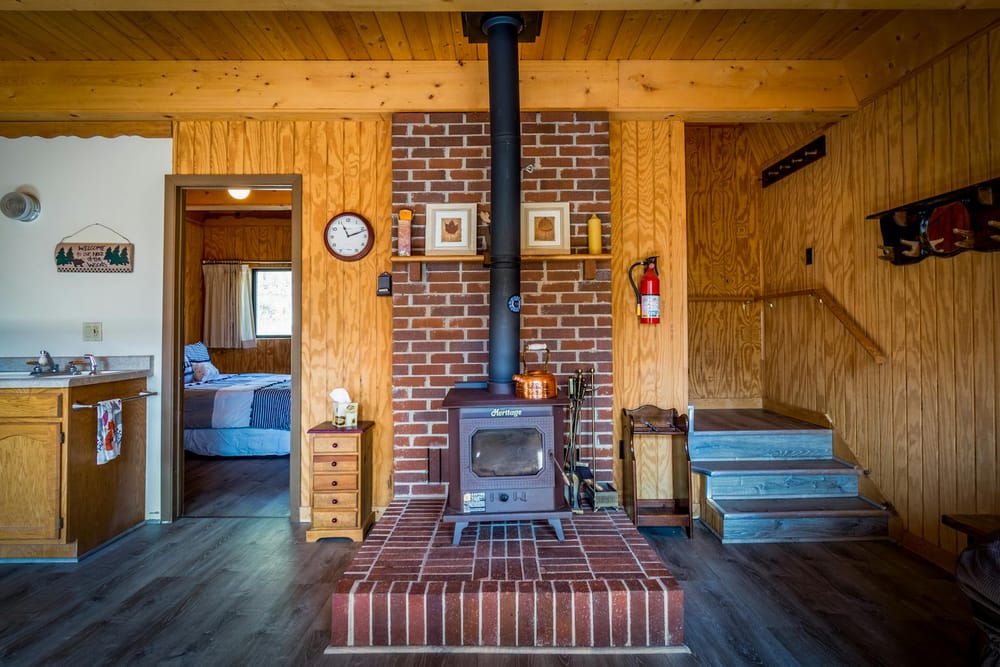
A fireplace is the quintessential Vermont ski house amenity. If you have a working fireplace or wood stove, feature it prominently in your photos and listing description. Guests will pay a premium for it.
Group Capacity
The dominant booking unit in the Stratton market is groups of 6–10 — two or three couples, or a family with older kids. Listings that clearly communicate sleeping capacity, bathroom count, and common space layout for groups convert better than listings that are vague about this.
Far &Away Manages Properties in Winhall and Bondville
We're locally based and manage properties in this exact micro-market. Our portfolio includes Whispering Pines Lodge (5 bedrooms, pool, hot tub, sauna) and Stratton Chalet (3 bedrooms, hot tub, sauna) — both in the Stratton area. When we talk about what works in this market, it's based on what we're seeing in our own listings, not industry averages.
For owners considering whether to list a Winhall or Bondville property, the honest first question is: does the income potential justify the effort? Our guide on whether to Airbnb your Vermont property walks through that decision honestly, including the time commitment of self-managing and when it makes sense to bring in a manager instead.
A Note on Wastewater and Septic
Vermont has strict wastewater permitting requirements. If your property has a septic system and was built before 1989, confirm that the system is permitted for short-term rental use — particularly for the occupancy level you plan to list. The Vermont DEC can and does pursue unpermitted STR use on systems that weren't designed for the guest load. This is especially relevant in rural Winhall, where most properties are on private septic systems.
Get a free property estimate — we'll tell you what your Winhall or Bondville property can realistically earn, and what compliance steps to take before you list.
Related reading
- Bondville, Vermont Vacation Rentals: The Local's Guide
- How to Choose a Vacation Rental Management Company in Vermont: An Owner's Guide
- How to Price Your Vermont Vacation Rental: A Dynamic Pricing Guide
- Vermont STR Bookkeeping: What Most Property Managers Get Wrong
Related guides for Vermont STR owners