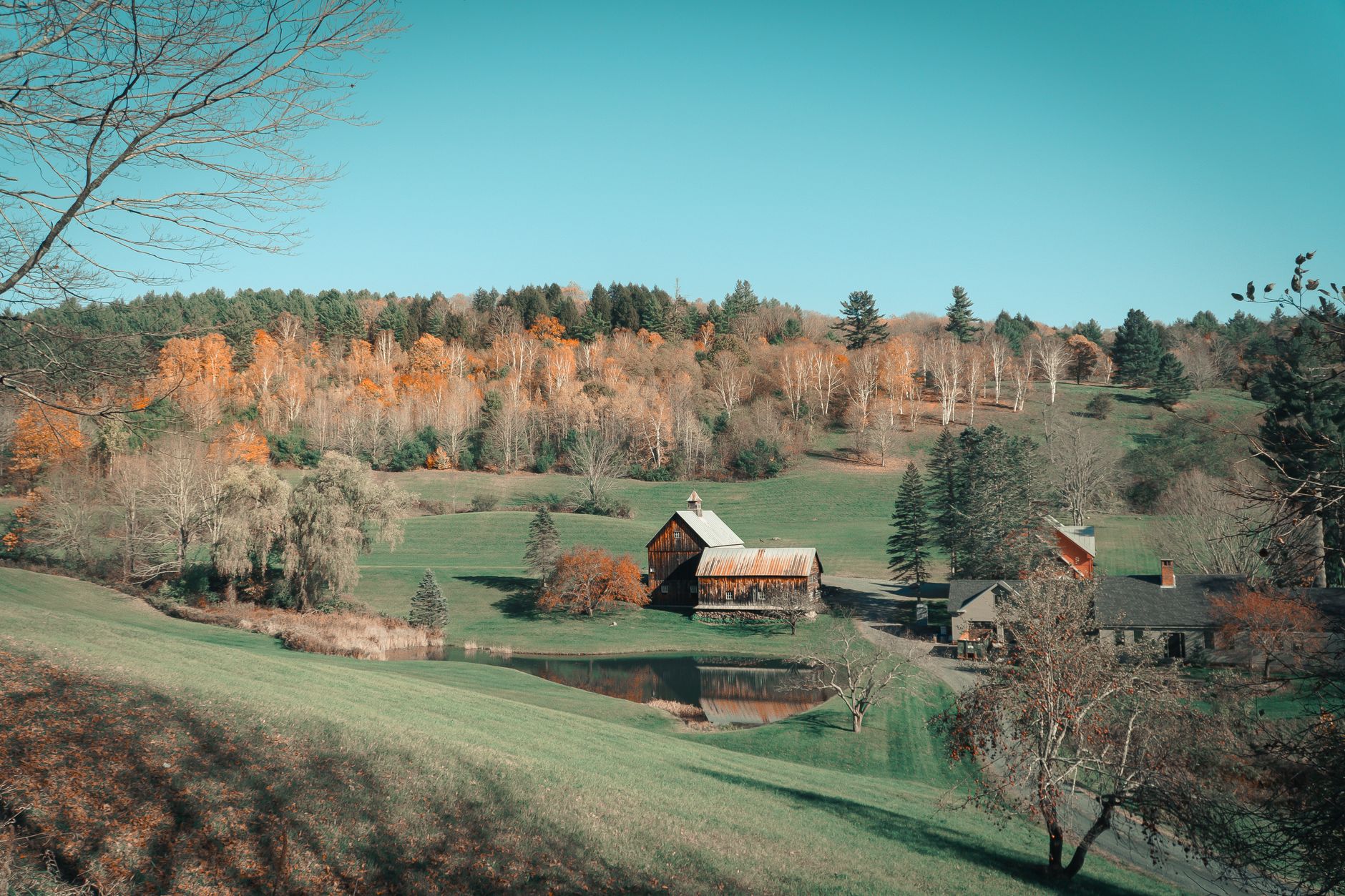
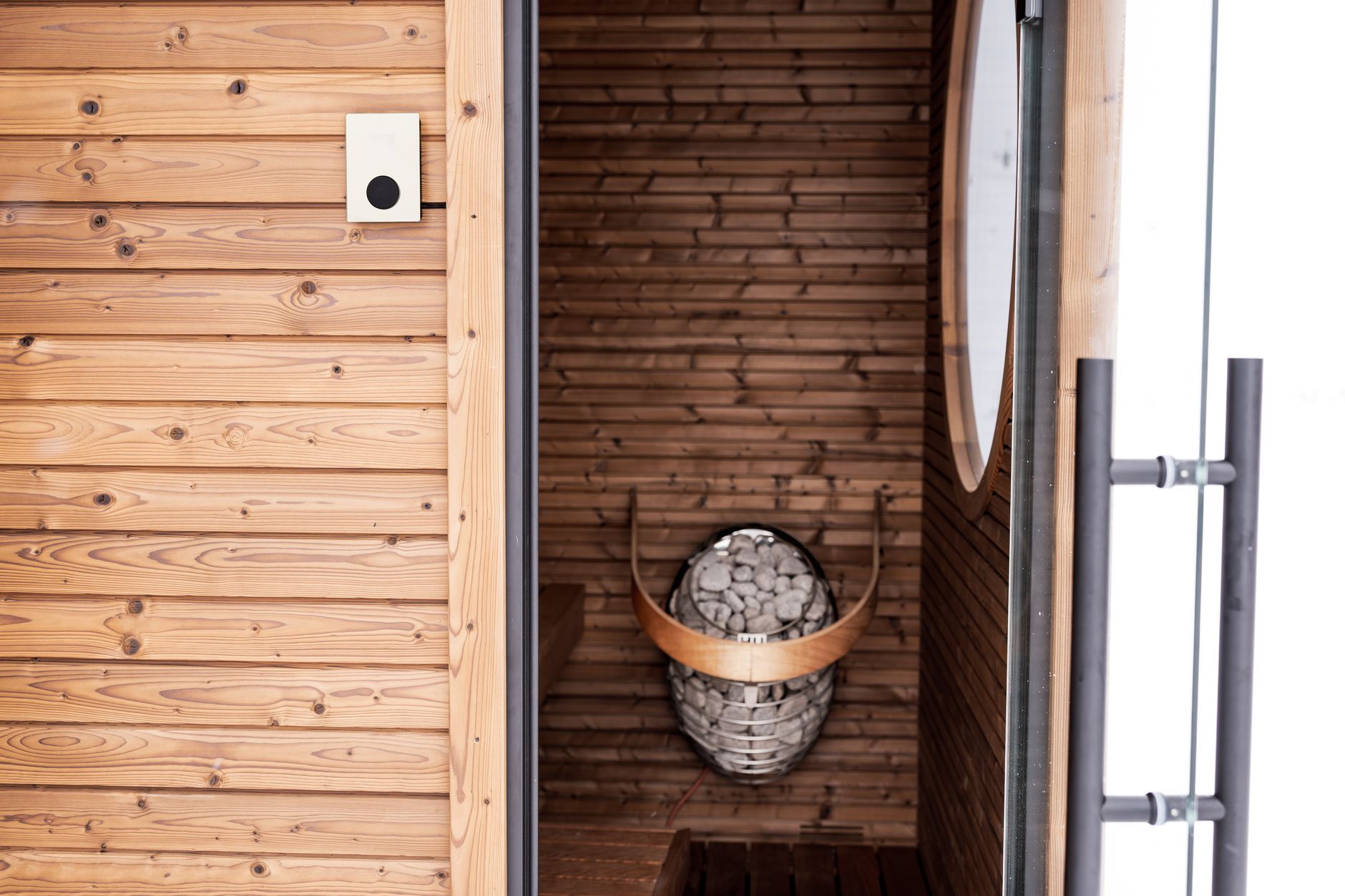
You're standing in the amenities section of your listing draft, or maybe you're scrolling Facebook Marketplace at 11 p.m., and the question won't go away: barrel sauna or infrared? Both cost real money. Both promise the same thing on paper — warm bodies, five-star reviews, higher nightly rates. But they're actually pretty different pieces of equipment, and one of them makes a lot more sense for a Vermont rental than the other.
Here's the honest breakdown, based on what guests near Stratton actually book, what breaks first, and what your electrician will say when you show them the spec sheet.
What Guests Actually Picture When They See "Sauna" in Your Listing
When someone books a Vermont cabin in February and the listing says "sauna," they're picturing a wood-lined room, cedar smell, hot rocks, maybe a ladle and a bucket. They're picturing what they've seen in Finland, or at a ski resort spa, or in a friend's backyard barrel.
They're not picturing a fabric-lined pod that plugs into a standard outlet. That's not a knock on infrared — infrared saunas have real health benefits and a legitimate following. But guest expectations at a mountain rental skew traditional, and expectations drive reviews.
If you list "sauna" and deliver infrared, expect a handful of guests to write "not a real sauna" in their review. If you list "infrared sauna" clearly, you're fine — but you've also narrowed your appeal. Traditional sauna is what the average skier hunting a cabin with hot tub and sauna near Stratton is searching for.
The short version
- Barrel sauna: Traditional wood-fired or electric, 150–195°F, humid when you add water to rocks, holds 4–8 people.
- Infrared sauna: Uses infrared panels to heat the body directly, 120–140°F, dry, typically holds 1–3 people.
Cost, Installation, and What Your Electrician Will Tell You
Sticker price isn't the whole story. Here's what actually matters for a Vermont rental.
Barrel saunas run roughly $4,000–$12,000 for the unit itself, depending on size, wood quality (Nordic spruce vs. cedar vs. thermowood), and heater type. Wood-fired heaters are cheaper and more "authentic" but require guests to build a fire — which most won't do correctly, and which creates real liability. Electric heaters are the standard for rentals and require a dedicated 240V circuit, usually 30–50 amps. That's an electrician visit, a permit in most Vermont towns, and possibly a panel upgrade if your cabin is older.
Site prep matters too. Barrels need a level pad — gravel, concrete, or a proper deck rated for the weight (a loaded 6-person barrel with water and people can push 2,000+ pounds). Budget another $1,000–$3,000 for pad and electrical rough-in if you don't already have it.
Infrared saunas run $2,000–$6,000 for a decent 2–3 person model. Most plug into a standard 120V outlet, though larger units want a dedicated 20-amp circuit. No pad, no permit in most cases, no chimney. You can put one in a spare bedroom or a finished basement corner in an afternoon.
For a rental owner watching cash out the door, infrared wins on install cost by a wide margin. But install cost is a one-time number. Nightly rate and occupancy are recurring.
Which One Actually Drives More Bookings in Vermont
Search behavior tells the story. Guests searching for Vermont ski rentals filter for "sauna" without specifying type. When they land on your listing and see photos, the outdoor barrel — steaming in the snow, string lights, a snowbank behind it — is what makes them click "book." It's the shot that ends up on Instagram. It's the reason your listing gets shared in the group chat.
Infrared saunas photograph fine, but they photograph like a piece of furniture. They don't sell the trip. And for group rentals — which is most of what earns real money near Stratton — a 2-person infrared cabinet doesn't work socially. Eight friends aren't taking turns for 40 minutes each.
If you're weighing this as an investment question, the traditional sauna is what shows up in the amenity ROI data for Vermont rentals. It commands the nightly rate premium. It's the amenity people brag about to friends who ask where they stayed.
That said, infrared has a real audience: solo travelers, couples, wellness-focused guests, and shoulder-season bookings from people who don't ski. If your property leans toward romantic weekends or is smaller (2–4 guests), infrared can pencil out — especially if you already have a hot tub doing the heavy lifting on the "wow" amenity.
The Vermont Climate Factor Nobody Talks About
Vermont winters are the exact climate a traditional sauna was invented for. Nine-degree night, guests come off the mountain, they want to sweat and then stand in a snowbank. The contrast is the point. An outdoor barrel delivers this perfectly.
An indoor infrared unit delivers a warm sit-down. Which is nice, but it's not what a Vermont ski trip is selling. The whole reason people drive four hours from Boston or six from New York to a quiet cabin near Stratton is the sensory experience of winter — cold air, wood smoke, hot water, snow. A barrel sauna is part of that story. An infrared cabinet is a wellness product you could get at home.
Summer changes the calculation a little. In July, sitting in a 190°F wood room is a harder sell than a 130°F infrared session. But Vermont's rental economy is winter-weighted, and your amenities need to earn during peak weeks. Build for January, not August.
Maintenance reality in a rental context
Barrel saunas are simple but they're outdoor wood. Expect to:
- Re-stain or oil the exterior every 1–2 years
- Replace the interior benches after 5–8 seasons of heavy rental use
- Deal with heater elements failing (electric) or chimney cleaning (wood-fired) annually
- Sweep out debris and check the door gasket monthly during heavy use
Infrared saunas need almost nothing — wipe down the interior, replace a bulb or panel every few years. Lower maintenance is a real point in their favor, especially if you're managing remotely. This is worth talking through with whoever handles your seasonal maintenance checklist.
Guest Safety, Liability, and What Your Insurance Cares About
Both units carry liability, but the risk profiles differ.
Traditional saunas at 180°F can cause burns from touching the heater or rocks, dehydration, and dizziness on exit. Wood-fired units add fire risk — if a guest overloads the firebox or leaves the door open, you have a real problem. Most Vermont STR insurance policies will cover sauna incidents but will want documentation: posted rules, heater guards, working smoke detectors nearby, and a maximum occupancy sign. Talk to your carrier before install, not after. Your standard homeowner's policy almost certainly doesn't cover this — see what we've written about what STR insurance actually needs to cover.
Infrared units are safer on paper. Lower temperatures, no fire, no rocks. The main risks are dehydration and guests staying in too long. Liability-wise, it's closer to a hot tub than a traditional sauna.
Either way, house rules matter. Post a laminated card inside and in the guest guide: no glass, no alcohol inside the unit, 20-minute session max, no children unattended, no use after heavy drinking. Guests who ignore rules become the guests you're filing claims against later.
A Simple Decision Framework
Here's how we'd think about it for a specific property:
Go with a barrel (traditional) sauna if:
- Your property sleeps 6+ and books mostly groups and families
- You have outdoor space with power access or willingness to trench a line
- Winter is your primary revenue season
- You're competing at the higher end of the market and want an amenity that photographs
- You already have a hot tub — a barrel pairs with it and doubles the après experience
Go with an infrared sauna if:
- Your property is smaller (sleeps 2–4) and skews couples/romantic bookings
- You have no outdoor space or your HOA restricts exterior structures
- Your electrical panel can't handle a 240V/40A addition without a costly upgrade
- You want the amenity check-mark with minimal install and maintenance
- Wellness/shoulder-season bookings are a real slice of your calendar
Skip both if:
- You're still working on basics like reliable Wi-Fi, good beds, and a fully stocked kitchen. A sauna won't save a rental with weak fundamentals. Fix the furnishing basics first.
What We Actually See in the Stratton Market
Among the properties we manage and look at competitively near Stratton, Winhall, and Bondville, traditional barrel saunas are winning. Guests search for them, book for them, and mention them in reviews. The photo of a lit-up barrel in the snow does work no interior amenity can match.
Infrared shows up occasionally, usually in smaller couples-focused rentals or as a secondary amenity in bigger homes that already have a barrel outside and want an indoor option for morning use. It's a nice add-on. It's rarely the headline.
The properties earning the highest nightly rates during peak weeks — the ones in our income-by-season data that clear four-figure nightly rates in January and February — almost all pair a hot tub with a traditional sauna. That's the combination guests will pay for. If you're planning amenities for a new build or a renovation, that's the target.
Frequently Asked Questions
Can I run a barrel sauna on standard 120V power?
No. Most barrel sauna heaters require 240V and 30–50 amps on a dedicated circuit. Smaller 3–4 person units sometimes offer 120V heaters, but they take much longer to heat up and struggle in cold Vermont conditions. Budget for an electrician regardless.
How much can a sauna actually add to my nightly rate?
It varies by property size and season, but combined with a hot tub, a traditional sauna can support a $50–$150 per night premium during peak winter weeks in the Stratton area. The bigger effect is on occupancy — you fill more nights at your target rate rather than discounting to compete.
Do I need a permit to install a barrel sauna in Winhall or Stratton?
Usually yes for the electrical work, and sometimes for the structure itself depending on size and permanence. Wood-fired units may trigger additional review. Check with your town's zoning office before you buy, and factor permitting into your timeline — see our Winhall STR permit guide for the broader compliance picture.
Is a wood-fired barrel sauna a bad idea for a rental?
For most owners, yes. Wood-fired units create fire liability, require guests to operate them correctly, and add chimney maintenance. They're wonderful for private use. For rentals, an electric heater in the same barrel gives guests the same experience with a switch instead of a firebox.
The Takeaway
For a Vermont rental near Stratton, a traditional barrel sauna is the stronger investment in almost every scenario. It matches guest expectations, photographs like nothing else, pairs with a hot tub for the après-ski experience people are actually buying, and holds its value through the winter market where your property earns most of its income. Infrared has a real place — smaller properties, couples rentals, indoor-only situations — but it's the specialist choice, not the default.
If you're weighing this against other amenity upgrades or trying to figure out what your property could realistically earn with the right setup, we can walk through the numbers with you. Get a free revenue estimate for your Stratton-area property and we'll model what a sauna (or hot tub, or both) would actually add to your annual income.