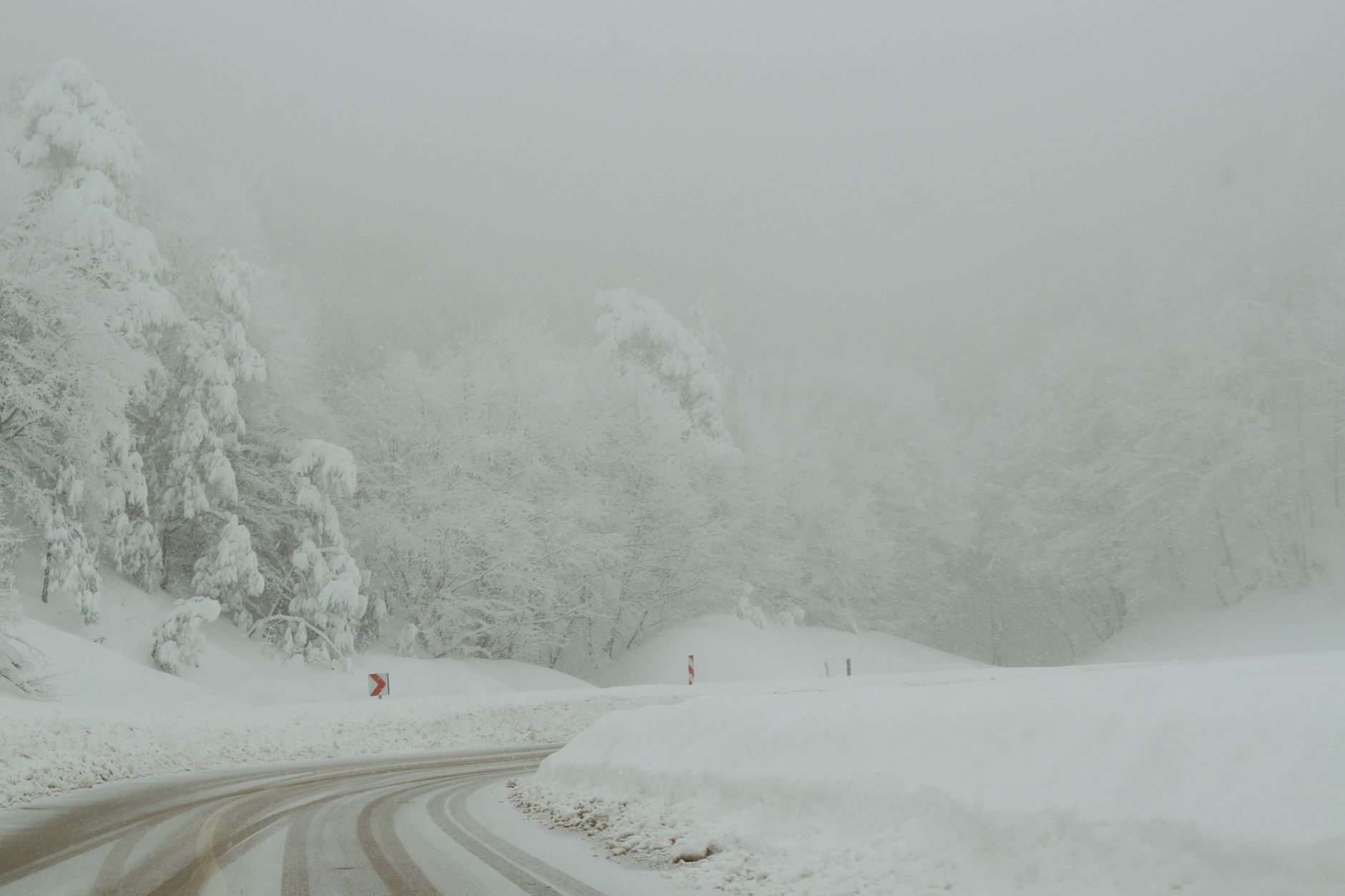
You've booked a house near Stratton, and now you're staring at your driveway wondering if that sedan is going to make it up the mountain in February. It's a fair question, and the answer isn't as simple as "yes, get an SUV" or "no, you'll be fine."
The real answer depends on where your rental sits, when you're arriving, what tires you have, and whether you're comfortable driving in snow. Let's walk through it honestly so you can make the call before you leave home.
The Short Answer: Usually No, But It Helps
Most guests get to their Stratton-area rentals in a front-wheel-drive car without any drama. Vermont Route 30 and Route 11, the two main arteries feeding the Stratton area, are plowed aggressively throughout the winter. The state and town crews start early, and by the time most guests arrive on a Friday afternoon, the pavement is clear.
But "usually fine" isn't "always fine." If you're arriving during an active storm, driving after 10 p.m. when plows have paused, or renting a house up a steep private road, the calculus changes. A 4WD or AWD vehicle with proper tires turns a stressful drive into a normal one.
The bigger factor, honestly, is tires. A 4WD truck on worn all-seasons will slide off the road faster than a front-wheel-drive Civic on real snow tires. If you're driving your own car up from Boston, New York, or Hartford, tire quality matters more than drivetrain.
Where Your Rental Sits Matters Most
Stratton-area rentals fall into three rough categories when it comes to winter access, and each one has a different answer to the 4WD question.
Rentals right off Route 30 or Route 11
These are the easiest. Both roads are state-maintained, plowed and salted regularly, and stay clear even during storms. If your rental is in Bondville village or along one of these main roads, a front-wheel-drive car with decent all-season tires is almost always enough.
Rentals on town roads in Winhall or Stratton
Most vacation homes sit on town-maintained roads that branch off the main routes. These get plowed too, but usually a bit later and with less frequency than state roads. Some are steep. If you're renting in the hills above Bondville or up toward the mountain, you'll likely encounter at least one climb where AWD or snow tires make life easier. For context on where different rentals sit, our Bondville, Winhall, and Manchester comparison breaks down each area.
Rentals on private roads or long driveways
This is where 4WD becomes close to mandatory. Private roads may only get plowed once a day, sometimes less. Long, unpaved driveways with any grade can defeat a front-wheel-drive sedan even with the road cleared. If your rental description mentions "private road," "shared driveway," or "up a hill," ask the host or manager directly what vehicle they recommend.
Tires Matter More Than Drivetrain
Here's the thing most guests underestimate: a mediocre all-season tire is not a snow tire. The rubber compound stiffens in the cold, the tread doesn't clear slush, and stopping distances get long. This is true whether your car has two-wheel drive, all-wheel drive, or true 4WD.
Dedicated winter tires (look for the mountain-and-snowflake symbol) transform how a car handles on cold pavement, packed snow, and ice. If you drive to Vermont regularly in winter, buying a set of winter tires on their own wheels is one of the best safety investments you can make. Around $800-$1,200 for a set, and they last several seasons.
If you're not going to install winter tires, at least check your tread depth. Anything under 5/32" is marginal for snow. A worn tire, regardless of drivetrain, is going to slip.
What about all-season tires?
Modern all-season tires are better than they used to be, and if they're relatively new and rated well, they'll handle plowed pavement fine. What they won't handle well is:
- Fresh snow more than a couple of inches deep
- Ice, especially the "black ice" that forms on shaded bridges and curves
- Steep uphill starts from a dead stop
If any of those describe your last mile, you want either winter tires or 4WD, ideally both.
When You're Arriving Changes Everything
Timing is the variable most people forget. The same road can be perfectly drivable at noon and treacherous at 11 p.m.
Weekend afternoons
Friday between 2 p.m. and 6 p.m. is peak arrival time. Roads have been plowed and salted since morning. Unless a storm is actively dumping snow, you'll find the routes clear. This is when most guests arrive, and it's the easiest window.
Storm days
Vermont gets serious snowstorms, and some of them arrive right when you're trying to check in. During an active storm, even main roads can have 2-4 inches of accumulated snow between plow passes. Visibility drops. Trucks jackknife on hills. If your arrival day forecast shows a winter storm warning, either leave earlier to beat it or plan to arrive later after crews have caught up. Our guide on driving to Stratton covers what to expect on the routes themselves.
Late-night arrivals
Plowing generally winds down around 10 or 11 p.m. If you're rolling in at 1 a.m. after a long drive, any snow that fell in the evening is still sitting on the road. Late arrivals in bad weather are the highest-risk scenario. If you can push your departure earlier or split the drive, do it.
Sunday mornings
Departures are usually easy. Roads have been plowed overnight, temperatures are often at their lowest (so ice is more of a factor than slush), and traffic is light. Give yourself extra time if it snowed overnight.
What to Actually Do Before You Leave
A few practical steps that make the difference between a smooth arrival and a stressful one:
- Check the forecast for your arrival day. Not just the current weather in Vermont, but the 24-hour outlook. If there's a storm coming, adjust departure time.
- Ask your host or property manager about the road. A one-sentence email like "What's the driveway like in winter, and do you recommend 4WD?" gets you an honest answer.
- Look at your tires. Tread depth, age (rubber hardens after about six years regardless of tread), and pressure. Cold weather drops tire pressure fast.
- Throw a shovel and traction mats in the trunk. Even if you never use them, they cost almost nothing and can get you unstuck.
- Download offline maps. Cell coverage in the hills around Stratton is spotty. Google Maps offline for the region takes 30 seconds.
If you're driving up as part of a larger group trip, coordinate arrivals. Someone with 4WD arriving first can radio back conditions, or help pull out a stuck car. Our large group ski trip planning checklist covers the coordination details.
Renting a Car vs. Driving Your Own
If you're flying in and renting a car at Albany, Hartford, or Boston, opt for an AWD SUV or crossover. The price difference over an economy sedan is usually $10-$30 per day, and the rental will almost certainly have all-season tires (not winter tires), so drivetrain becomes your primary safety margin.
Most major rental companies at these airports have SUVs available, but they book out during peak weeks. Reserve early, especially for MLK weekend, Presidents' Day, and the week between Christmas and New Year's.
If you're driving your own car and you have AWD or 4WD, you're in good shape as long as your tires are decent. If you have a front-wheel-drive sedan, the honest answer is: you'll probably be fine on main roads, but check with your host about the final approach, and don't attempt a steep driveway you're not confident in. For more on getting here, see our breakdown of airports, shuttles, and parking.
What Happens If You Get Stuck
It happens. Someone in a rental car, tired from a long drive, tries to punch up a snowy driveway and ends up with wheels spinning. Here's what to do:
- Don't keep spinning the tires. You'll dig deeper and glaze the snow into ice underneath.
- Try rocking. Gently forward, gently reverse, small amounts of throttle. Sometimes this frees you.
- Call your property manager or host. They know local plow contractors and tow services, and some will come help.
- Call a tow service directly if needed. Have your rental address ready. Response times during storms can be an hour or more.
The single most common stuck-car scenario at Stratton rentals is guests trying to back a front-wheel-drive car up a snowy driveway. If in doubt, park at the bottom or on the shoulder of the plowed road and walk. Your rental probably has plenty of parking flexibility, and a five-minute walk with luggage beats a $200 tow.
Packing for the Drive Itself
A few winter-specific items in the car aren't overkill:
- Warm layers you can drive in (not a giant parka, which is dangerous in a seatbelt)
- Water and a snack in case you're delayed
- Phone charger and cable
- A blanket in the back seat
- Ice scraper and small brush
- Windshield washer fluid rated to -20°F or colder
Regular washer fluid freezes on the windshield, which is both scary and dangerous. Winter-rated fluid is $4 at any gas station. Our full Vermont ski house packing list covers what to bring once you arrive.
Frequently Asked Questions
Do I really need 4WD to reach a Stratton rental, or is AWD enough?
AWD is enough for essentially every situation you'll encounter at a Stratton-area rental. True 4WD (with low range) matters for off-road use, not paved and plowed mountain roads. AWD combined with decent tires handles Vermont winters well.
Will my front-wheel-drive sedan make it up to the mountain?
On main roads like Route 30 and Route 11, yes, almost always. On steep private driveways or unplowed side roads, maybe not. Check with your host about the final approach and consider parking at the base of a steep driveway if conditions look bad.
Are rental car companies at nearby airports going to give me winter tires?
No. Rental cars in the Northeast come with all-season tires, not winter tires, even in the middle of ski season. This is why opting for an AWD SUV rental matters more than it would for a summer trip.
What's the most common mistake guests make driving to Stratton in winter?
Arriving late at night during or right after a storm, tired, in a two-wheel-drive car on worn tires, and trying to push up a steep driveway. Any one of those factors is manageable. All four together is how cars end up in ditches or wrapped around trees. Adjust timing, tires, or vehicle to remove at least one variable.
The Takeaway
You don't strictly need a 4WD vehicle to reach most Stratton-area rentals in winter. But you do need one of the following: a car with AWD or 4WD, good winter or fresh all-season tires, or the willingness to time your arrival around storms and daylight. Ideally, two of those three.
Before you leave, message your host or property manager and ask specifically about the last mile to the house. That one conversation clears up more uncertainty than any general guide can. If you're still deciding between rentals and want one that's easier to reach, ask about main-road access when you check availability.