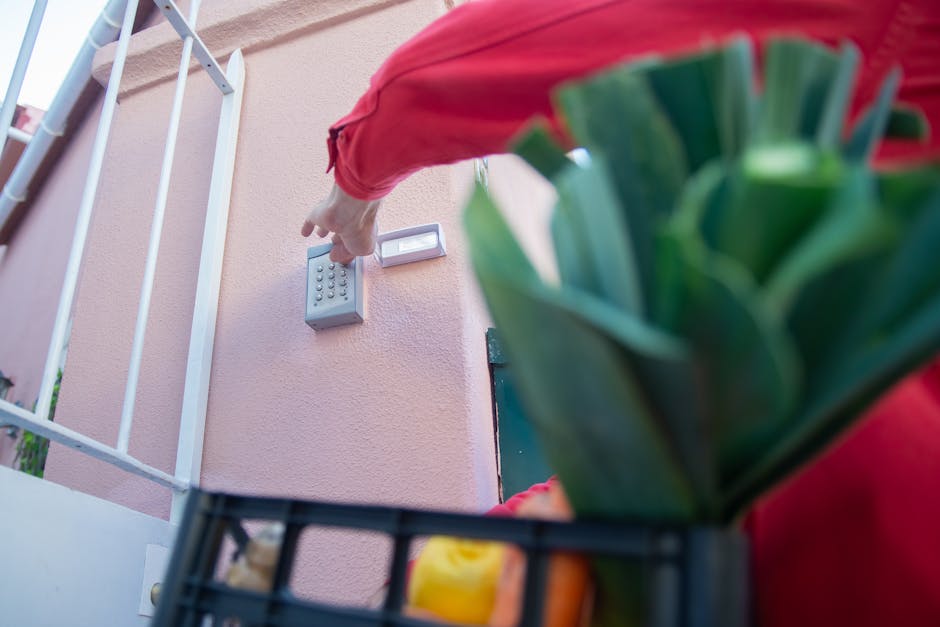
You bought a smart lock, installed it in October, and by late January the keypad is unresponsive, the deadbolt stutters halfway, and your 7 PM check-in guest is standing in the driveway with cold hands and a dead car battery. If you own a vacation rental in Winhall, Stratton, Dover, or Jamaica, you've probably seen this movie — or you're trying to avoid starring in it.
Smart locks are table stakes for a Vermont short-term rental. Nobody wants to coordinate a lockbox at 10 PM in a snowstorm. But most of the smart locks sold on Amazon are designed for suburban Phoenix, not a ridgeline house that hits -15°F in January. Here's what actually holds up in Vermont winters, what fails, and how to set your lock up so you're not fielding frantic texts during a nor'easter.
Why Vermont Winters Break Smart Locks
Three things kill smart locks in cold weather, and they usually happen together.
Battery drain. Alkaline AA batteries lose roughly 50% of their capacity below 20°F. Lithium holds up better but still drops. A lock that lasted 8 months in October will die in 6 weeks in February. Guests arrive, punch the code, hear nothing.
Mechanical binding. Wood doors swell and contract. Steel strike plates ice over. A deadbolt that threw cleanly in November meets resistance in January, and the lock's motor isn't strong enough to force it. You get a half-thrown bolt and an error beep.
Connectivity loss. Wi-Fi smart locks mounted on an exterior door with poor signal lose their connection in the cold. Z-Wave and Zigbee hubs sitting near a drafty entry can glitch. If you rely on remote code generation, you're suddenly locked out of your own lock.
None of this is theoretical. If you talk to anyone managing homes in Bondville or Stratton for more than one winter, they've got a story about a lock failure at 9 PM on a Friday.
Which Smart Locks Actually Work in the Cold
We're not going to name-and-shame specific brands, because models change constantly and firmware updates matter more than the sticker on the box. But here's what to look for.
Rated operating temperature
Check the spec sheet. If the manufacturer lists an operating range of 32°F to 120°F, skip it. You want a lock rated to at least -4°F (-20°C), and ideally lower. Commercial-grade locks from companies that sell to hotels and property managers almost always list a wider range than consumer locks.
Mechanical key backup
Yes, really. A physical key override saves you when the batteries die, the Wi-Fi drops, or the keypad freezes. You don't give the key to guests — you hide one in a weatherproof lockbox as a last-resort backup, and your cleaner or local contact knows where it is. Any lock without a key backup is a liability in Vermont.
Keypad over fingerprint
Fingerprint readers don't work with gloves. They also struggle with cold, dry fingers. A backlit physical keypad — ideally one you can see in snow glare and the dark — is the right call for a rental. Capacitive touchscreens get flaky in cold, so push-button keypads tend to be more reliable.
Deadbolt vs. lever-handle
Deadbolts are more secure but have more motor load. Smart lever-handle locks (where the smart part is the latch, not the bolt) have less mechanical resistance and often outperform in cold. The tradeoff: deadbolts are what guests and insurance expect on a primary entry. Most owners end up with a smart deadbolt and accept the maintenance.
Local control, cloud optional
You want a lock that can generate and accept codes without an internet connection. If your Wi-Fi goes down (and in Vermont, it goes down), the lock should still work with pre-loaded codes. Cloud-only locks are a bad bet.
Installation Choices That Matter More Than the Brand
We've seen great locks fail because of a bad install, and we've seen mediocre locks survive five winters because someone set them up right. The install is often where it goes wrong.
Door alignment is everything
Before you install the smart lock, check that your deadbolt throws cleanly by hand. If you have to lift the door or push it shut to turn the key, the smart lock's motor will struggle every single time — and in cold weather, it'll fail. Fix the door first. That might mean a shim, a new strike plate, or planing the door edge.
Use lithium batteries, period
Alkaline is fine for a thermostat in a heated room. For an exterior lock in Vermont, use lithium AA or AAA batteries. They cost 3x as much and last 4x as long in cold. This is non-negotiable.
Weatherproof the exterior
A small bead of silicone around the keypad housing (not over the keys) keeps blowing snow out of the electronics. A storm door helps enormously — it blocks wind-driven snow and keeps the lock housing closer to room temperature. If your main entry doesn't have a storm door, that's probably the single highest-ROI upgrade you can make for lock reliability.
Mount the hub inside, close to the door
If your lock uses a bridge or hub (common with Z-Wave and some Wi-Fi locks), mount the hub on the interior wall closest to the lock, not in a closet across the house. Signal through an exterior wall in winter — especially a well-insulated one — is weaker than you'd think.
Operational Setup for Rentals
The lock hardware is maybe half the battle. The rest is how you run it.
- Unique code per guest. Generate a new code for each booking, auto-expire at checkout. Never reuse codes, never give out the same code twice.
- Code active window. Codes should activate at check-in time (not days before) and expire at checkout. This limits risk if a code gets shared.
- Backup code for your cleaner and local contact. Separate from guest codes, always active, change quarterly.
- Battery monitoring. Set alerts at 40% battery. Replace them at 30%. Don't wait for low-battery warnings — in cold weather, the lock can go from "fine" to "dead" overnight.
- Pre-arrival check. Someone physically tests the lock before every guest arrival in winter. Yes, every one. This is boring, but it's the only way to catch a sticky bolt or a loose battery before the guest does.
If you're self-managing and this list makes you tired, that's a reasonable reaction. It's one of the reasons we wrote about what a vacation rental manager actually does — the lock routine is one of many small operational things that eat weekends.
What to Tell Guests Before They Arrive
Half of lock problems aren't actually lock problems. They're guests trying to enter the wrong code, pushing buttons too fast, or not understanding how the lock works. A good pre-arrival message cuts your emergency texts by more than half.
Include in your check-in instructions:
- The exact code (and whether to press # or just the digits).
- A note that in very cold weather, the lock may take 2-3 seconds to respond after you enter the code — don't re-enter.
- If the door seems stuck after unlocking, push the door firmly while turning the handle (ice can bind the latch).
- Your phone number and a backup number (your cleaner or local manager) for lockout situations.
Clear instructions matter more as part of a bigger communication plan — the same principles apply to arrival info, parking, and heat. If you want a deeper look at guest messaging flow, our piece on guest communication timing covers what to send and when.
When the Lock Fails Anyway
You'll have a failure eventually. It's not if, it's when. Here's the realistic protocol.
You need a local contact within 20 minutes. If you're a remote owner trying to run a Winhall rental from Boston, you don't have a plan — you have a hope. A neighbor, a cleaner, a handyman, or a property manager has to be able to show up with a key or a drill. In winter, "I'll call a locksmith" doesn't work: there aren't many in the Stratton area, and they're not on standby at 10 PM Saturday.
Hidden mechanical key. In a lockbox around back, in a weather-sealed container, with a code you can text to a stranded guest in an emergency. Change the lockbox code quarterly.
Battery swap kit on-site. A sealed container with fresh lithium batteries and a Phillips screwdriver, inside the house, so your local contact doesn't have to drive 40 minutes to a store. The Vermont STR maintenance guide covers what else belongs in a well-stocked owner closet.
The sustainable answer is to prevent 95% of failures through good hardware and a monthly check routine, and build a 20-minute response for the other 5%. If you're thinking seriously about this for a property you're setting up for the first time, our step-by-step guide to setting up a Stratton-area rental walks through the systems in order.
Cost Reality: Budget for It Properly
A cheap smart lock is $80. A rental-grade smart lock with a decent keypad, lithium battery life, and cold-weather rating runs $200-$400. Add $30/year in lithium batteries, and plan for a full lock replacement every 3-5 years in Vermont conditions (sooner if it's a high-traffic entry with 50+ turnovers a year).
Compared to the cost of one middle-of-the-night emergency callout, or one bad review from a guest who stood in the cold for an hour, this is cheap insurance. The locks are a small line item inside a larger operations budget — our breakdown of realistic rental income near Stratton gives you the revenue side to budget against.
Frequently Asked Questions
What's the coldest temperature a smart lock can handle?
It depends entirely on the model. Consumer-grade locks often fail below 20°F. Commercial or hospitality-grade locks are typically rated to -4°F or lower. Always check the manufacturer's operating temperature range before you buy, and assume real-world performance will be slightly worse than the spec.
Do I need Wi-Fi at my rental for a smart lock to work?
No — but you want it. A lock that only works with cloud connectivity is risky in Vermont, where Wi-Fi outages happen. The best setup is a lock that stores codes locally (so it works offline) but can also be managed remotely when the internet is up. Many owners pair the lock with a cellular backup like a Verizon Jetpack for critical connectivity.
Should I use the same smart lock on every door of my rental?
No. Only the main guest entry needs the full smart-lock treatment. Side doors, garage entries, and basement doors are better served with a simple keyed deadbolt that only you and your cleaner access. Fewer smart locks means fewer batteries to monitor and fewer failure points.
What if I don't want to deal with any of this myself?
That's a legitimate choice. Owning a Vermont rental remotely without a local operations partner is genuinely hard — lock failures are just one example. If you're weighing self-management against hiring help, our comparison of full-service vs. hands-off management lays out what each model actually covers.
The Takeaway
Smart locks in Vermont vacation rentals work when you treat them as a system, not a device. Buy hardware rated for the cold. Install it on a door that aligns cleanly. Use lithium batteries. Monitor battery level and test before every winter arrival. Have a 20-minute local backup plan when it fails anyway. Do all of that, and the lock becomes invisible — which is exactly what you want.
Skip any one of those steps, and you'll be the owner texting a guest at 10 PM in a snowstorm trying to walk them through a battery compartment they can't find.
If you own a home near Stratton and want to know whether your current lock setup will hold up this winter — or you're setting up a rental for the first time and want it done right — see how we manage Stratton-area rentals or get in touch for a free property assessment.