
Your Listing Photos Are Your First — and Often Only — Sales Pitch
Guests booking a vacation rental near Stratton Mountain don't call ahead. They don't ask questions before they decide. They scroll through search results, they look at photos, and they either click or they don't. The decision to click — or to book — is made in under three seconds based almost entirely on what your lead photo looks like.
This isn't speculation. Airbnb's own data has consistently shown that professional photos increase booking rates significantly, with some analyses showing 40% faster time-to-booking and measurably higher average nightly rates compared to listings with amateur photography. In a market like Stratton, where ski weekends in February and foliage weekends in October can generate $600-$900 per night, better photos don't just fill your calendar faster — they fill it at higher rates.
What Guests Actually Look For in Listing Photos
Most owners think guests are looking for accuracy — they want to see what the property looks like. That's partially true. But what guests are actually responding to is feeling. They're imagining themselves in the space. They want to picture their family at that dining table, their coffee mug on that deck railing, their ski gear drying by that mudroom door.
Professional vacation rental photographers understand this distinction. Amateur photos document a space. Professional photos sell an experience.
The Hero Shot
Your lead photo is everything. It needs to be shot at the right time of day (golden hour for exterior, midday for bright interiors), with the right lens to show space without distorting it, and with staging that looks lived-in rather than clinical. A dark, slightly blurry iPhone photo of your front door is the fastest way to lose the click to the listing below yours.
Living Areas and Kitchen
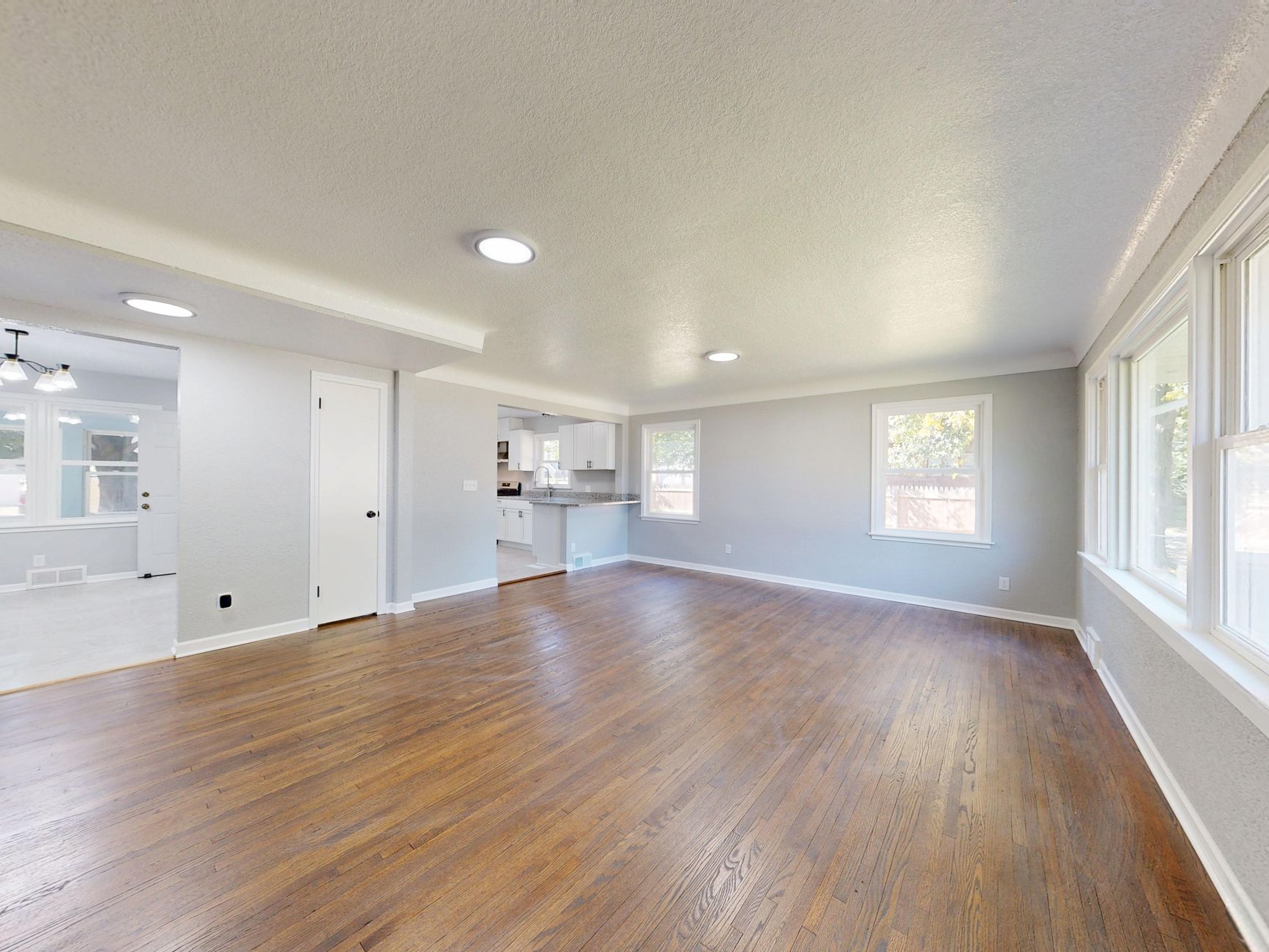
These are the highest-scrutiny rooms. Guests want to see a kitchen they'd actually want to cook in — clean, well-lit, with enough counter space and equipment. Living areas need to look comfortable and spacious. A wide-angle lens, proper lighting, and staging (pillows fluffed, counters cleared, a bowl of fruit on the counter) makes the difference between a room that looks cramped and one that looks inviting.
Bedrooms
Families and groups count bedrooms carefully. Each room needs its own dedicated photo showing the bed, the bedding quality, and available storage. If you have a primary suite with an ensuite bath, those warrant two or three photos on their own.
Bathrooms
Bathrooms are make-or-break for many guests. A clean, well-lit bathroom photo builds trust. A dark, cluttered, or low-resolution bathroom photo raises questions. Professional photographers stage bathrooms with fresh towels, clear counters, and the right lighting to make even a modest bathroom look like a hotel amenity.
Amenities
Hot tub? Fireplace? Game room? Ski storage? These amenities are often why guests choose your property over a competitor. They need dedicated photos. A guest who books for the hot tub needs to see the hot tub — not just a mention of it in the description that they may or may not read.
Outdoor Spaces and Seasonal Shots
Vermont properties have seasonal personality. A deck that looks ordinary in February looks extraordinary in July. A fireplace that reads as a standard feature in summer is a major booking driver in January. Seasonal photography — showing the property in its best light across different times of year — lets you use the right photos during the right booking window and gives your listing a sense of warmth and authenticity that static photos can't match.
DIY Photography: What You're Actually Giving Up
Smartphone cameras have improved dramatically, but there are specific things they still can't replicate in real estate photography: controlled depth of field, HDR exposure blending for rooms with bright windows, tilt-shift correction for straight vertical lines, and the kind of consistent, calibrated color that makes every room look true-to-life rather than orange or green-tinted.
Beyond equipment, professional real estate photographers know how to stage a room quickly, where to position the camera for maximum perceived spaciousness, and how to handle difficult lighting conditions — overcast Vermont days, dark-paneled ski chalets, rooms with a single north-facing window.
The gap between a good iPhone photo and a professionally shot listing photo is visible immediately, even to guests who couldn't articulate why. They just know one listing feels like a place they want to stay and another doesn't.
The ROI Calculation Is Simple
A professional vacation rental photo shoot in Vermont costs roughly $300-$600 as a one-time expense. If better photos help you book one additional ski weekend at $700 per night, the shoot has paid for itself before your first guest checks out. If better photos let you hold $50 higher nightly rates year-round, you've recovered the cost within a few weeks and generated thousands more in annual revenue.
This is one of the clearest ROI investments in short-term rental management. The operators who understand this don't treat photography as an optional line item.
Professional Photography Is Included with Every Far & Away Onboarding
At Far & Away Homes, professional photography is part of our standard onboarding for every property we manage. We don't treat it as an add-on or an upgrade. It's the baseline, because listing photos are the foundation of everything else — your nightly rate, your occupancy, your review scores, your ranking in Airbnb search results.
When you onboard with us, we coordinate the photo shoot, handle the staging guidance, and ensure your listing goes live with images that represent your property at its best. You don't have to find a photographer, brief them, or review the shots. We take care of it.
If you want to see examples of how we present properties — or if you're curious what your property could look like with a professional shoot — get in touch with Far & Away Homes. We're happy to walk you through what the onboarding process looks like.
Related reading
- How to Choose a Vacation Rental Management Company in Vermont: An Owner's Guide
- How to Price Your Vermont Vacation Rental: A Dynamic Pricing Guide
- Vermont STR Bookkeeping: What Most Property Managers Get Wrong
- How Much Does Vacation Rental Management Cost in Vermont? An Honest Breakdown
- Vacation Rental Management Near Stratton Mountain, Vermont